Dave Heath

One of the photographers I came across whilst undertaking Context and Narrative was Dave Heath. I saw a small exhibition of his work at the Photographers Gallery and blogged about it here. Heath had a difficult childhood, his father leaving the family when he was one, his mother abondoning him when he was four and his grandparents declining to raise him. As a result he was raised in an orphanage and a series of foster homes in Philadelphia. It is possible that this difficult upbringing influenced his work much of which has a sense of sadness about it. Many of … Continue reading Dave Heath

Bruce Gilden

Bruce Gilden is an American street photographer born in 1946. He first became interested in photography whilst studying at Penn State University, which he quit without finishing, and went on to take it up as a career. Gilden’s work has worked primarily in black and white using flash to give his images a direct and powerful quality. Gilden initially started photographing the people of Coney Island and New York and has gone on to work in many part of the world including the UK, Ireland, Japan and Haiti. Gilden’s work comprises street scenes including aware and unaware portraiture. Gilden’s approach … Continue reading Bruce Gilden

Emil Otto Hoppé

Emil Otto Hoppé (1878 – 1972), or E O Hoppé as he is often referred to, was a German born photographer who worked in the UK primarily in the first half of the 20th century. Born in Munich, in the early 1900s he travelled to London to train as a financier. Whilst working for Deutsche Bank he became interested in photography and in 1907 he gave up his career in banking to work as a professional photographer. In the period from 1907 to 1939 Hoppé became Britain’s most influential photographer, so much so that Cecil Beaton referred to him as … Continue reading Emil Otto Hoppé

Typological portraits

Whilst looking for information about photographers who were known for their typolgical portraits I came across the work 445 Portraits of a Man. The work was first displayed at the Zimmerli Art Museum, Rutgers University, New Jersey as part of their exhibition Striking Resemblance: The Changing Art of Portraiture in 2014, and consisted of 445 silver gelatin 3 x 2.4 inch photographs of a man taken over an estimated 20 – 30 year period. The man in the photographs was Franklyn Swantek, not a photographer but the owner of Swantek Photo Service, which proclaimed itself as “Michigan’s largest operators and … Continue reading Typological portraits

Research task – Identity (P.21)

Can you think of some examples from your own experience, or of someone you know, where there was a clash of identity? What happened and can you see how fluctuating notions of identity are still potentially problematic? What does it mean for you, to be yourself? Following the EU referendum in 2016 I spent six months feeling angry about the result and in order to do some practical to help me deal with my frustration I applied for an Irish passport. Since receiving it I use it in preference to my UK passport and whilst I do necessarily think of … Continue reading Research task – Identity (P.21)

Exercise 4 – Managing your time (P.14)

Depending on your circumstances, you might allocate time in different ways – aday a week, an hour a day, larger blocks of time such as weekends or holidays, ora combination of approaches.Ask yourself the following questions?● How much time you can allocate to study each week?● What is my most/least productive time of the day?● How well do I manage time?● What is a realistic schedule to undertake Part One (around 80 learning hours) and when might you set your first deadline? My aim is to achieve a minimum of nine hours study per week and hopefully more. I think … Continue reading Exercise 4 – Managing your time (P.14)

Exercise 3 – Analysis and reflecting (P.12)

For this exercise I have to choose an image by one of four photographers and write two short, 50 word, pieces; the first describing the image and the second how I relate to this work. The photograph I have chosen is by Zanele Muholi from her 2015 exhibition Somnyama Ngonyama, meaning ‘Hail, the Dark Lioness’ The image is a monochrome head and shoulder portrait of a black woman against a mottled background wearing what looks, at first glance, to be tribal or indigenous dress, however, looking closely, the woman’s headress and earrings are wooden clothes pegs. The most strinking element … Continue reading Exercise 3 – Analysis and reflecting (P.12)
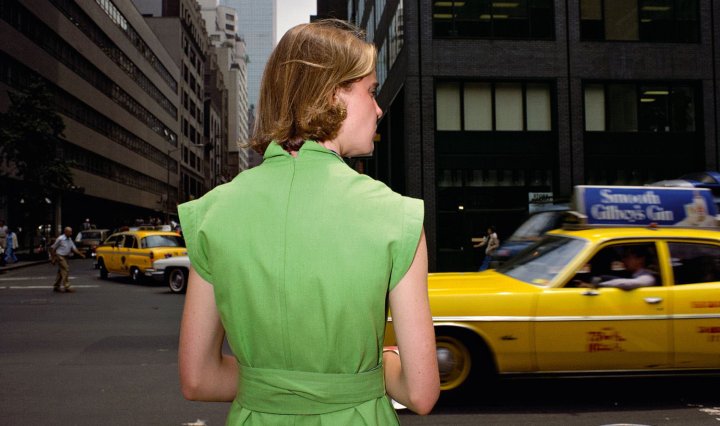
Introduction – exercise 1

What do you want/need from the course unit? Increase my knowledge of contemporary and historical practitioners. Improve my ability to translate exercises and assignments into ideas; experiment more. Broaden my concepts, shoot more varied series, edit more rigorously. Produce more considered work. Engage more with fellow students, attend study visits/regional meetings, try attending online hangouts. Continue reading Introduction – exercise 1