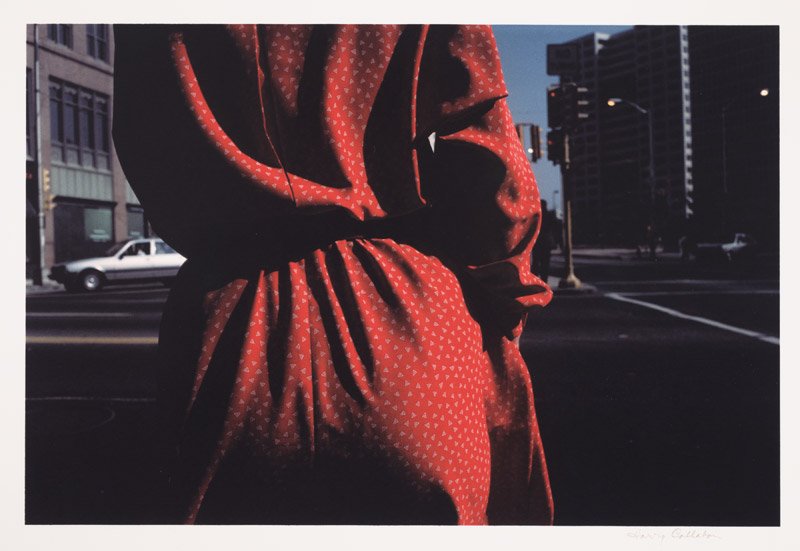
Harry Callahan (1912 – 1999) was a self-taught American photographer who was inspired to take up photography as a career after attending a workshop given by Ansel Adams in 1941. Callahan worked for Chrysler before leaving to study engineering at Michigan State University but dropped out part way through his course and returned to work at Chrysler where in 1938 he joined the amateur camera club.
Having decided to pursue a career in photography, he was invited by Arthur Siegel and László Moholy-Nagy to teach at the Chicago Institute of Design, the post-war home of the Bauhaus, and between 1949 and 1961 he was the head of photography there. In 1961 he left Chicago to set up the photography department at the Rhode Island School of Design where he taught until his retirement in 1977.
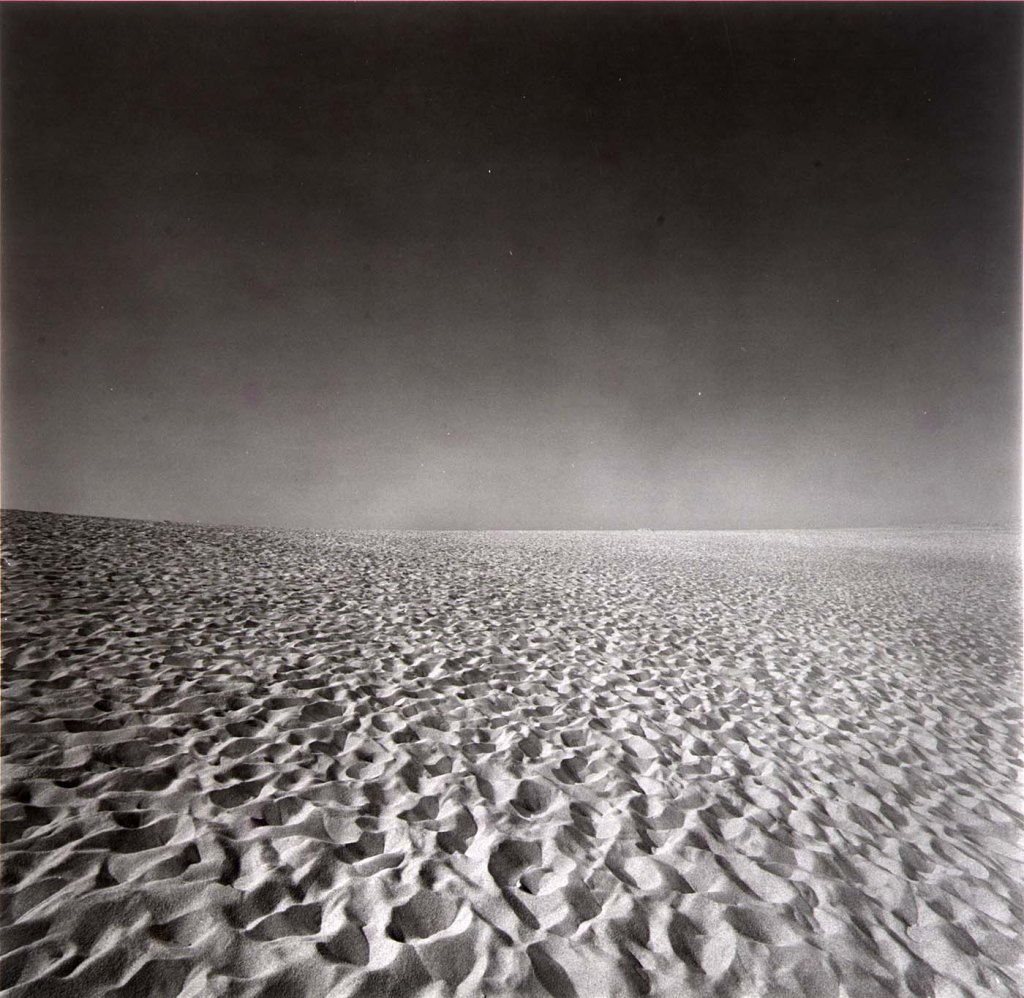
Callahan believed his lack of formal training allowed him to experiment. This combined with the way he appoached his work, as a personal response to his life, responding to what he saw, felt and experienced differentiated him from other American photographers working in the post-war period. In 1975 Callahan described his work as being grouped into three themes, ‘nature, buildings and people’ and a strand that linked them was his wife, Eleanor, who featured in many of his images.
Callahan’s work shows a sustained interest in line, composition and depth of field. He experimented with and used multiple exposures and he was an early adopter of colour film, experimenting with it as early as 1941 but due to the technical limitations and cost he did not exhibit in colur until the early 1970s. When he died in 1999 he left a body of work comprising around 100,00 negative and 10,000 prints which are held by the University of Arizona‘s Center for Creative Photography.
What I like about Callahan’s work is the self-confidence it displays. Callahan’s work was a reflection of his life and this was the advice he gave when teaching; that his students should focus the camera on their individual lives. He photographed what interested him in a way that pleased him and did not seem concerned by conventions or norms. Unlike Robert Frank who documented the lives of others in his book The Americans, Callahan seemed content documenting his own world and through it we see glimpses of the changes happening in America in the second half of the 20th century.
Sources
Harry Callahan | Photography and Biography (s.d.) At: https://www.famousphotographers.net/harry-callahan (Accessed 03/07/2020).
Tate (s.d.) Nature, buildings and people: Harry Callahan at Tate Modern – Tate Etc. At: https://www.tate.org.uk/tate-etc/issue-29-autumn-2013/nature-buildings-and-people (Accessed 03/07/2020).
 OCA517401I&P