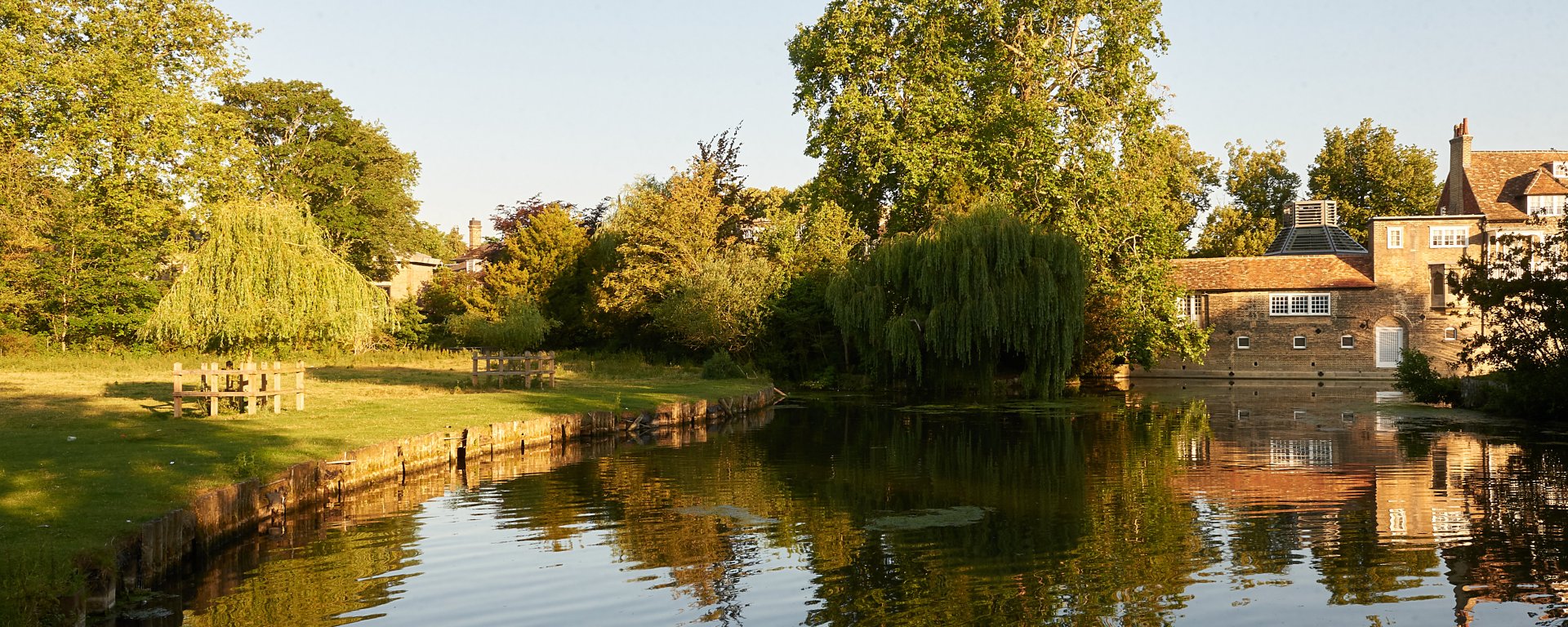
For this assignment I wanted to create a series of images that looked at national identity, how the United Kingdom and more specifically the English have responded to the coronavirus crisis and what this says about the country. There are several reasons for concentrating on England, first it is where I live and where I have first-hand experience of. Second, because of devolution many of the actions taken by the UK government only applied to England and finally because what I perceive as England’s uncertainty about its’ place in the UK and, post-Brexit, its’ place in the world.
Coronavirus hit the country around three months after the Conservative ‘Get Brexit done’ government was elected and shortly after the UK left the European Union on the 31st January 2020. Brexit was primarily driven by English nationalism with the populations in Scotland and Northern Ireland voting to remain in the EU and evidence which suggests that the vote to leave in Wales was skewed by English voters. Freed from the constraints of being in the European Union, and having taken back control, the crisis was an opportunity for the new ‘Global Britain’ to show how its innate superiority, which had previously been ham-strung by being in the EU, would enable it to ‘get coronavirus done’. Unfortunately, despite success in introducing measures to support employees and businesses, much of the government’s response has been characterised by over-promising and under delivering.
I wanted to explore this cognitive dissonance, the gap between perceived performance and actual performance, between the way a nation views itself and a more rational view, through the combination of images and text. My starting point was William Blake’s Jerusalem which ends with ‘In England’s green and pleasant Land’. Blake’s words conjure up a picture of England as a place of fields and hedgerows, babbling brooks and meandering rivers, not a country of PPE shortages and thousands dead. I think this idealised, imaginary, vision of England, set some time in the past has been, and continues to be, used by politicians to support ideas of English exceptionalism. However, the constant harking back to the past, and World War 2 in particular, as well as the unwillingness to deal with the world as it is now, far from signifying exceptionalism, betrays a nation lacking confidence.
My idea was to create a series of images that presented a vision of England as a green and pleasant land, an idealised version and one that sub-consciously referenced England standing alone against Hitler’s Germany in 1939. For the text I looked at newspaper headlines from the beginning of the coronavirus outbreak. Although I was not able to find copies of the Sun online, I felt that I had a broad enough range of titles to ensure the headlines were not too biased. My aim was to combine bucolic images of the English countryside with unrelated and sometimes damming headlines to in order to get the viewer to ask why are these put together and which is more representative of the country, the image or the text?
Although I had started on the concept before I read about her work, I think my approach is similar to Anna Fox’s My mother’s cupboards and my father’s words. Fox’s combination of jarring, often very aggressive, language and neat, mundane almost, images made me want to know more about Fox’s father’s relationship with the women in his household. Was the text a representation of someone who was ill or did it represent and underlying type of behaviour? And did the images of neat cupboards represent a tranquil existence that had been disfigured by illness or were they a coping mechanism as life became increasingly difficult for Fox’s mother?
I wanted the text I used functioned as relay and not to define the message of the images, thereby allowing the viewer to draw their own meaning, so I decided it was necessary to include the text with the images in order to provide some context. After some experimentation I decided to add the text to the image in the border and position it centrally on the bottom edge. My initial idea was to place the newspaper from which the headline was taken and the date of publication below, however, upon reflection I decided just to include the headline as I thought that was the important element of the text.
 OCA517401I&P