
Jim Goldberg (1953 – ) is an American photographer know for producing work that combines images and text. His breakthrough work was a series titled Rich and Poor, a series of images of afflent and impoverished residents of the San Francisco Bay area, produced between 1977 and 1985. The work looks at he social divide in America in the 1970s and 80s and features black and white portraits accompanied by hand written text from the subjects.
Speaking about his work to the Guardian in 2009 Goldberg stated:
“There’s a thread that runs through all the work that is to do with bearing witness. The photographs are about asking questions, though, not answering them. I’m not a politically radical person. In fact, I’m much more interested in being radical aesthetically.”
Jim Goldberg
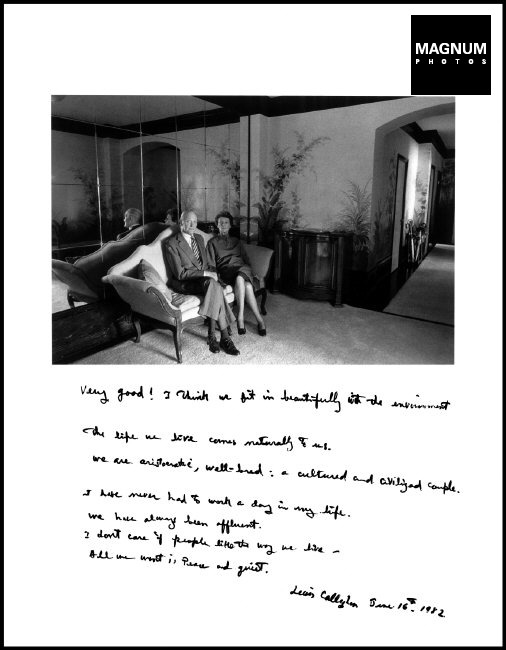
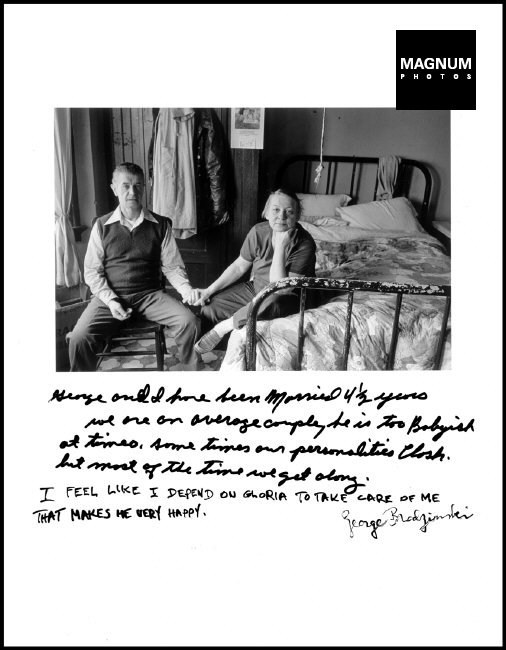
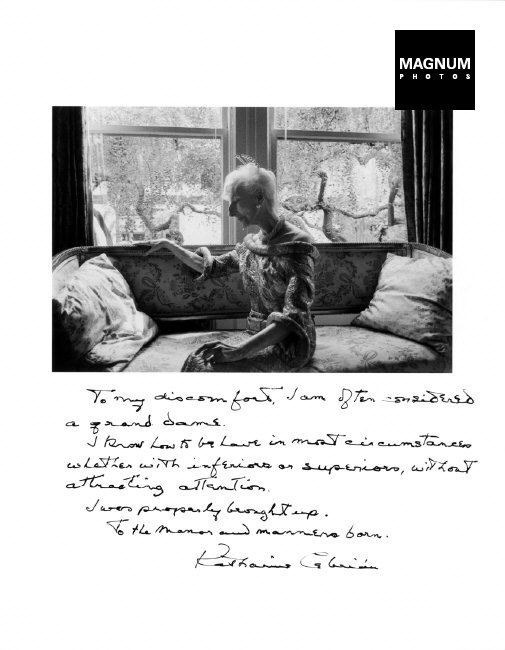
More images from Rich and Poor can be found here.
Looking at the images online I think the text slightly over-powers the images, due to to the small size of the images themselves, I think that if the work was viewed in a gallery setting the relationship between the images and the text would be more balanced. Despite this I think the combination of images and text is very powerful. The text adds context and develops the narrative of the images. What the subjects chose to write about themselves, their handwriting and spelling all reveal information that the photographs alone cannot and the combination of the images, an external view of them, combined with their text; their view of themselves, combines to make the work more powerful than the images alone would do.
As far as Rich and Poor is concerned, I’m not sure that I agree with Goldberg’s assertion that he is not politcally radical, but only aestheically radical. The comparison of rich and poor subjects does feel politcal and whilst the images themselves, which are somewhat neutralised by being shot in black and white, may not high-light the differences in the wealth, expectations and opportunities; the addition of the subjects’ own thoughts certainly adds a political element to the work.
Goldberg used the same approach in his series Nursing Home, produced in 1985, which is a collection featuring images and image/text combinations of nursing home residents and carers.

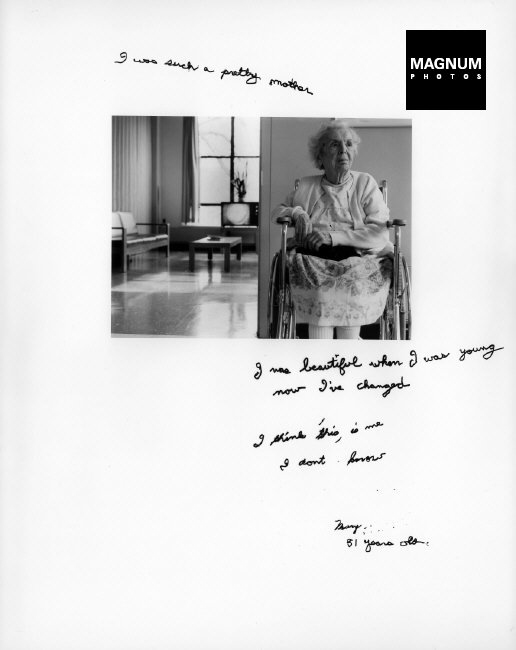
Having looked at both series and some of Jim Goldberg’s other work, what I like about his use of images and text is that it gives the subject greater input to the final image, rather than just appearing in it, and it also gives the viewer more of an insight to the people whose portrait they are viewing.
More images for Nursing Home can be found here.
Thinking about what Goldberg’s work has shown me and how I can use it in the future, the main learning is the power of collaborating with sitters when producing portraits. Whilst it will not be appropriate for subjects to contribute text all projects, I am keen to try this and I think it also high-lights the benefit of engaging with, rather than just photographing, when producing more straight-forward portraits.
Sources
Jim Goldberg: Rich and Poor (n.d.) At: https://ryersonimagecentre.ca/exhibition/jim-goldberg-rich-and-poor/ [Accessed: 28/05/20]
O’Hagan, Sean (2014) ‘The photographer who caught the heartbreak on both sides of America’s social divide’ In: The Guardian 03/07/2014 At: https://www.theguardian.com/artanddesign/2014/jul/03/jim-goldberg-rich-and-poor-photography [Accessed 28/05/2020].
 OCA517401I&P