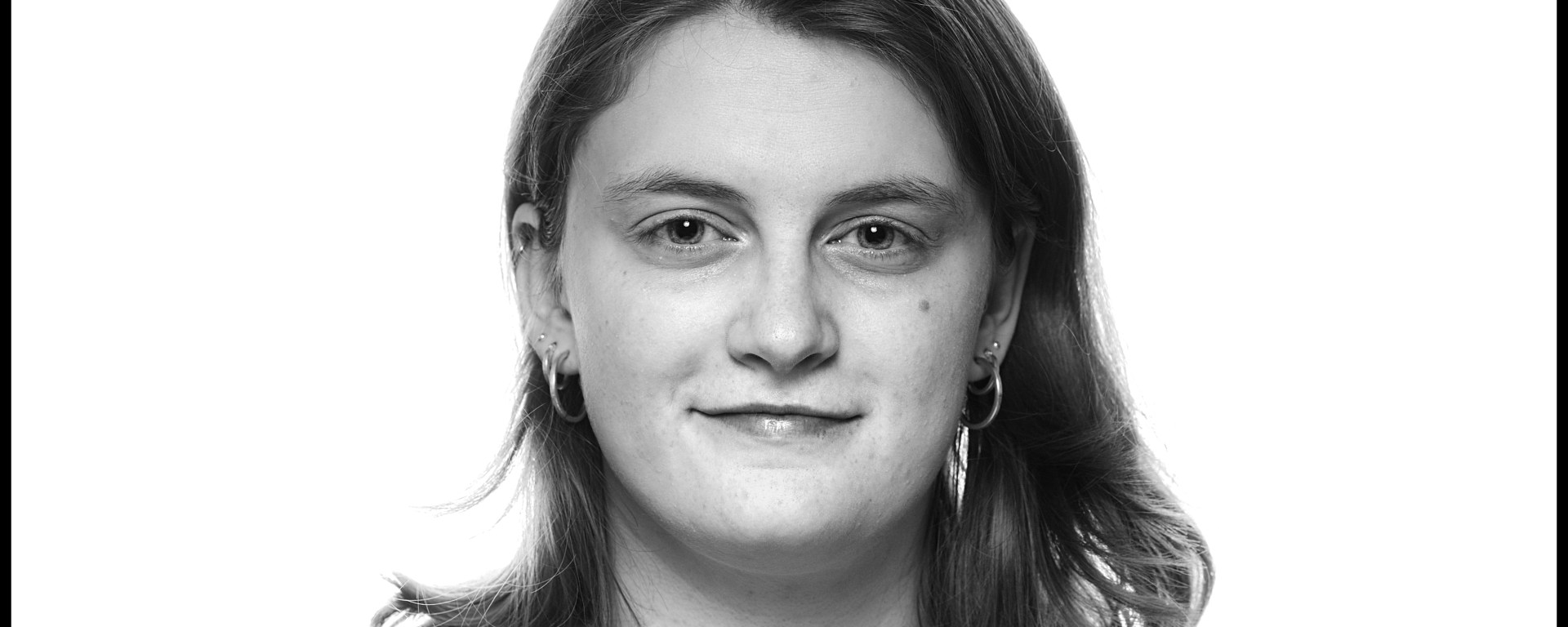
For this assignment I had to take a series of five portraits building on the exercises in the unit exploring portraits taken outside (street) and inside (studio).
From the brief I was unsure whether the series could be either street or studio or had to include both. I emailed my tutor who advised that if I was taking a series of images of an individual then a combination of outdoor and indoor locations would be appropriate, and if shooting different people then they should be linked together in some way regardless of whether the images were shot indoors or outdoors.
I decided that for this assignment I wanted to shot a series of indoor images as I wanted try and develop my understanding of using controlled lighting and also because several of the exercises in this unit involved a lot of outdoor shooting and I wanted to do something different.
Although I am still researching the photographers mentioned in this unit, one of those that I was most struck by was Irving Penn. Whilst I have reservations about the images in his book Worlds in a Small Room, I was interested in his use of a controlled environment and neutral backgrounds to remove distractions from his images.
In addition to Penn’s images, I was also stuck by a remark made by David Bailey at an In Conversation With event at the Royal Academy when he was asked about landscape photography. His reply was along the lines that, in his view, it wasn’t very interesting and that what was interesting was photographing people; this led me to look at some of his and then Rankin’s portraits. Although both are known as fashion photographers I was intrigued by their black & white portraits such as the one of Damon Albarn shown below.

What I like about the above image is the simplicity, the white background and monochrome, which encourage the viewer to engage with the subject.
I decided that I wanted to adopt a similar approach and to create a set of images of different people shot on a plain white background, even though this was stretching my tutor’s advice to shoot environmental portraits. I was fortunate that my daughter, who is in her final year at university, lives in a shared house with five other young women who were all prepared to have their photographs taken. As they are all in their final year they have shared experiences; the pressure of completing their dissertations and preparing for final exams, the excitement of finishing university combined with trepidation about what they will do next; the ups and downs of relationships during this pressured period. My aim was to produce a series of images that captured these young women at a pivotal time in their lives using a uniform approach.
For assignment one I had opted to shoot without flash, despite shooting in indoor, often poorly lit, locations as I was not confident about using flash. For this assignment I wanted to use flash to create some contrast in the images and I also wanted to shoot against a white background. I searched online for information on how to create a white background as my previous attempts had resulted in the background going grey. The approach I went with was to position the subjects in front of a large soft box. I then manually set my exposure to get the lighting I wanted on the models’ faces before adjusting the output of the rear soft box until the background was just over-exposed. Although I had not made a final decision about whether to present the images in colour or converted to black & white, this approach with the plain white background did lend itself to presenting the images as monochrome.
Initially I tried shooting with the key light straight in front of the models but I felt that the lighting was too flat, so I moved the key light, a flash shot through and octagonal soft box, to the side, roughly at 45 degrees to the model. Below are the best shots of each of the models.
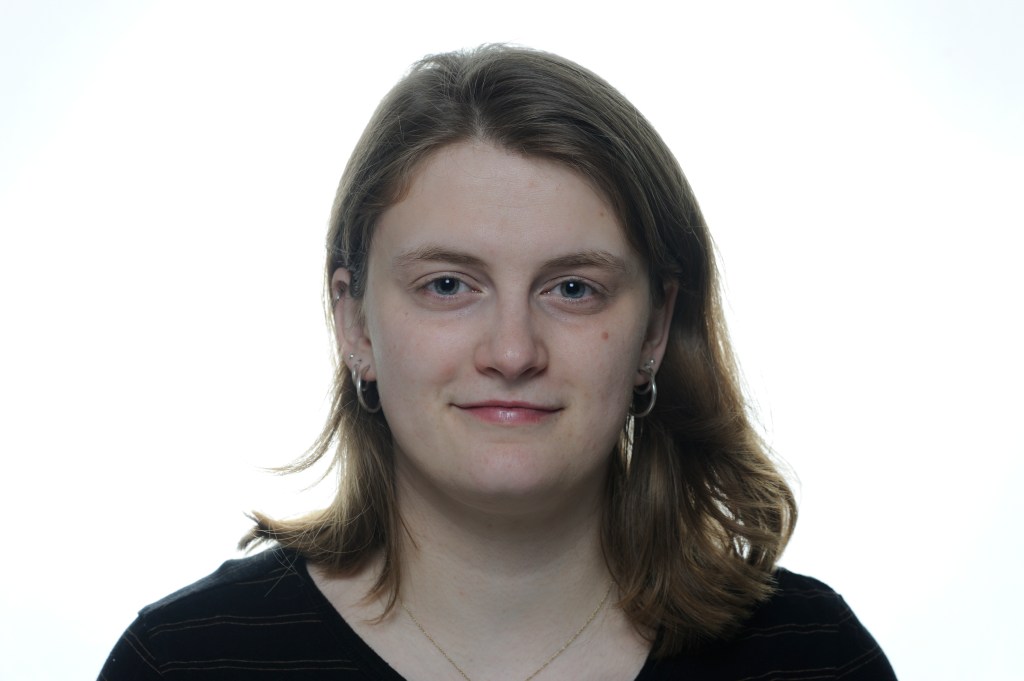


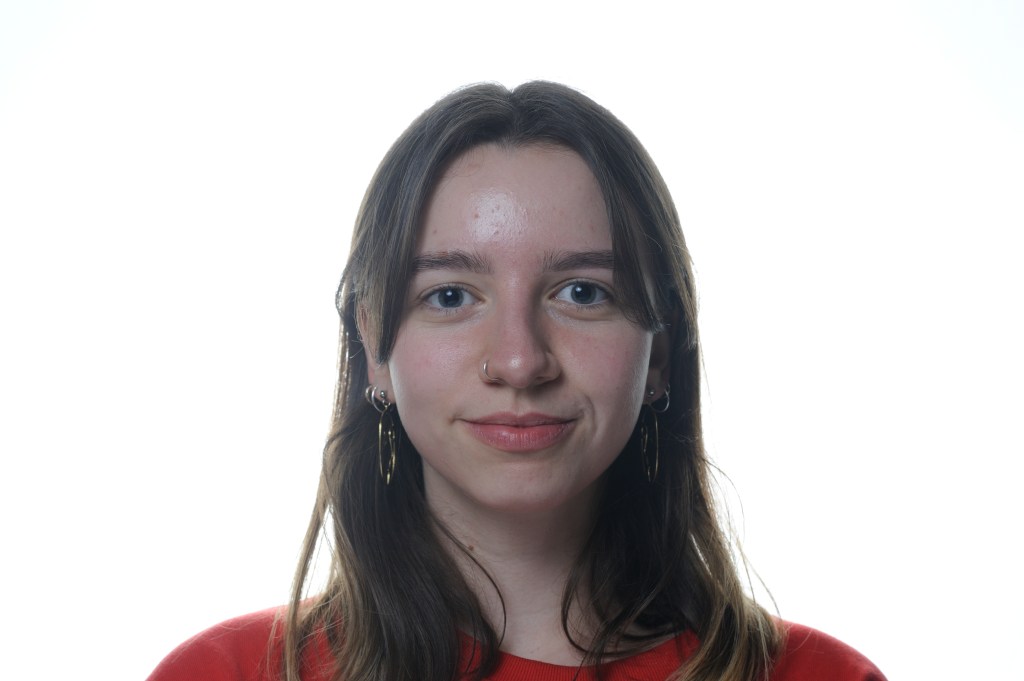

I deliberately under-exposed the images slightly as I wanted to avoid blowing high-lights and losing detail and I knew the images would need some work in post-processing whether I converted them to black and white or left them in colour. Despite shooting in front of a soft box, several of the images show dark corners due to vignetting and I needed to correct this in post-production.
In the end I decided to convert the images to black and white and my final selection is shown below; I decided to use slightly different lighting and poses as I felt these were the best images of each of the sitters.

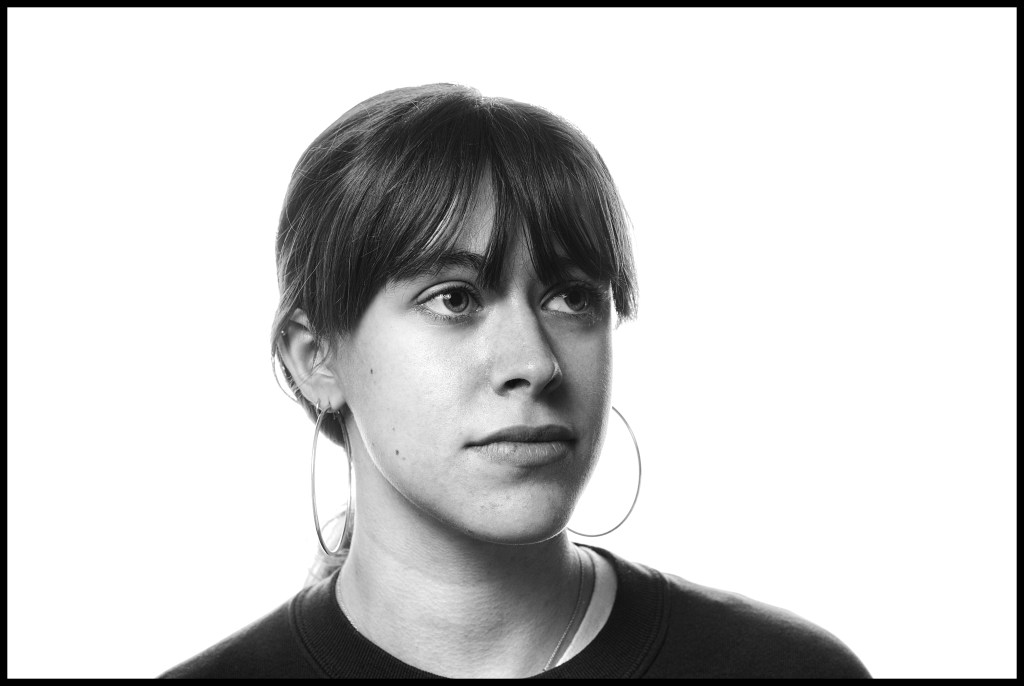
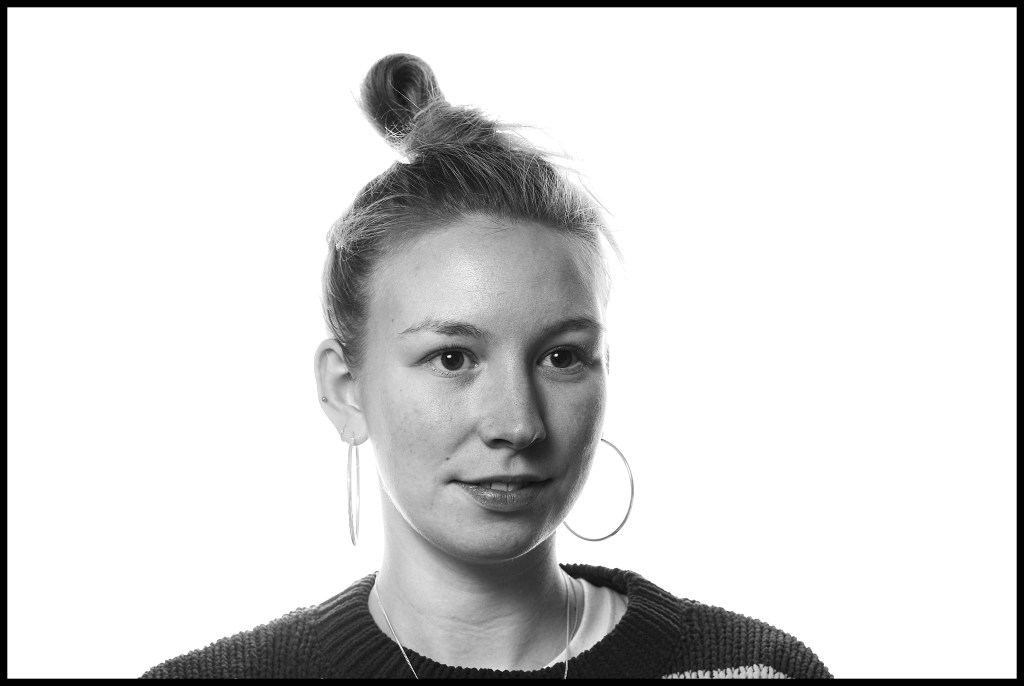

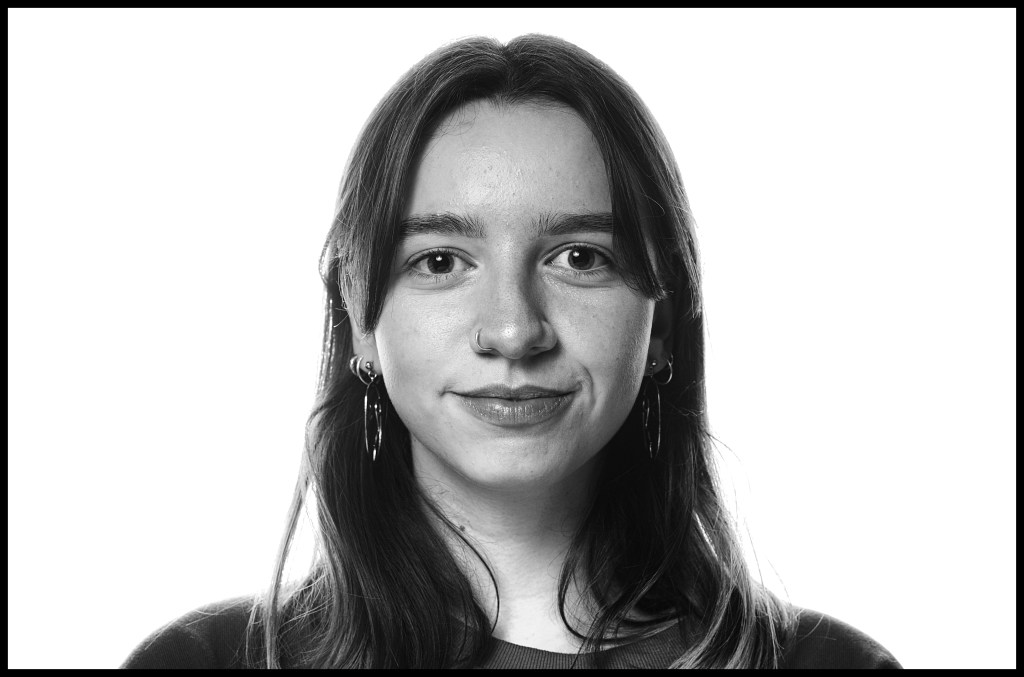
Looking at the set as a whole there are a couple of things that are obvious to me now that I did not consider when shooting. First, all the images were shot landscape and none portrait! I should have shot a combination so that I had a greater variety to choose from and portrait orientation would have given me the opportunity to produce an image more similar in style to the Rankin photograph of Damon Albarn. The second observation was that the images of models looking straight at the camera work better than those where they are looking to the side of the frame. Third, as an exercise in lighting the images have not worked as I had envisaged. Overall I was happier with the images where the light was placed at an angle of 45 degrees to the subject, which is not the case in the first image, and I was unable to control the spill of light from the rear soft box. Whilst I quite like this, particularly in image five, it is not consistent through the series and does not work well in images two and three.
Overall, I am pleased with the final five images and I think I have been successful in achieving a fairly consistent series that captures the occupants of a house-share during their final year at university. I think I have learned a lot about shooting in controlled conditions and the main lessons are, shoot more images, shoot portrait and landscape, take time to work out lighting in advance and have a very clear idea of what you want the final image to look like before you start shooting.
 OCA517401I&P