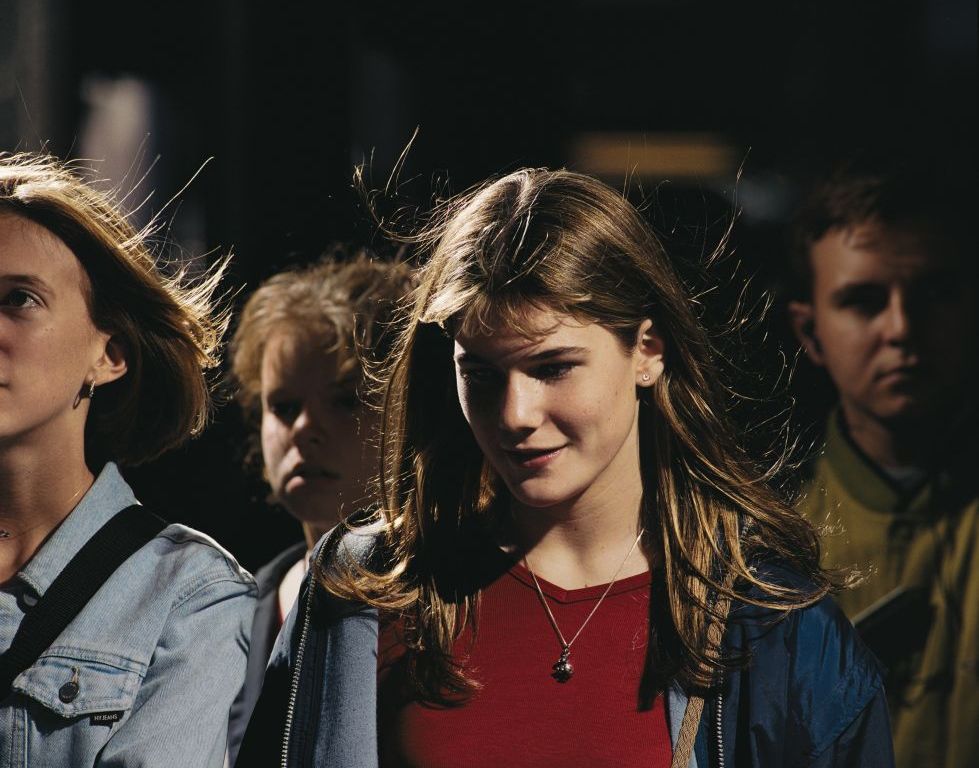
Philip-Lorca diCorcia’s work Heads is a set of portraits taken in New York’s bustling Time Square. To create the work diCorcia mounted a powerful strobe light on scaffolding and used a remote control to activate the camera and flash and because diCorcia worked in broad daylight his subjects were unaware that they were being photographed. The images show the people being photographed high-lighted by the flash while the backgound remains darker revealing less detail. The work, which was produced in 2000 – 2001 involved taking more than 4,000 images using a large format camera and of these only 17 were include in the finished work (Moma.org, n.d.).
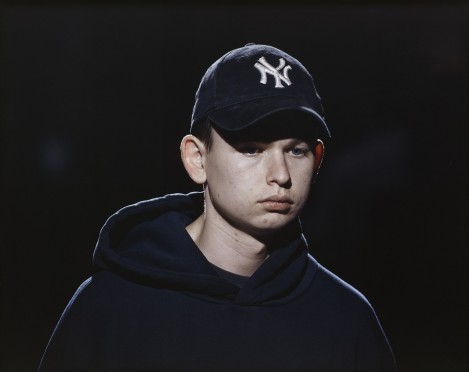
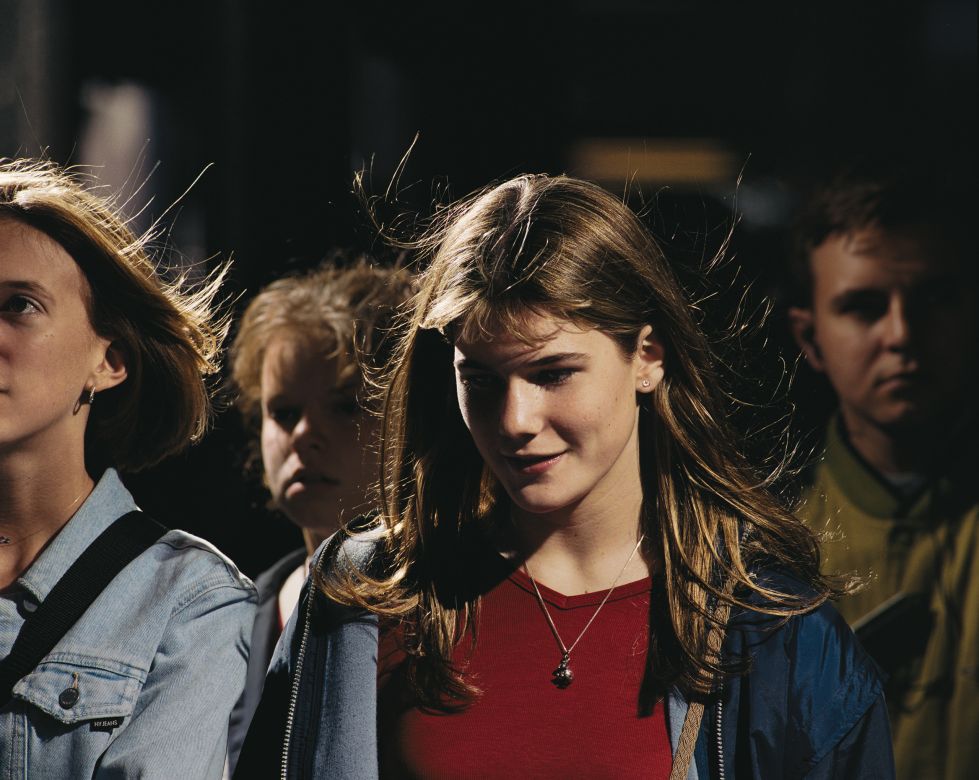

In considering the idea of how photographs portray identity diCorica’s approach is undoubtedly in the unaware camp and so the subjects were not able to portray an image they wanted to present to the world and thereby alter their identity. However, diCorica has a different take on what he was trying to achieve, stating ‘Pictures are usually a reflection of the person who produced them. In this series I wanted as far as possible to fade out my presence as the photographer.’ (Deutscheboersephotographyfoundation.org, n.d.). So it would appear that diCorcia’s main concern was not so much that he was trying to avoid the ‘constructed’ identity that a subject may present if they new they were being photographed; which ultimately could be considered an element of their overall identity, but rather that he wanted to avoid the images being a representation of his identity.
Ultimately whatever point the work sought to make about identity was overtaken as a result of the decision by one of the people photographed in the series to sue diCorica for violation of his right to privacy and religious belief. The case centred around the right of an individual to privacy and the artist’s right to free speech. Although photographing an individual in public is not illegal in New York, if the image is used for commercial or promotional purposes the subject needs to give their permission. Ultimately, after three appeals, diCorica won the case, although the judge noted ‘Even while recognizing art as exempt from the reach of New York’s privacy laws, the problem of sorting out what may or may not legally be art remains a difficult one.’ (Gefter, 2006)
I like the unguarded nature of the Heads images but I am unsure how much they reveal about the subjects’ identities and whether or not they convey more, or a more ‘truthful’ version, than photographing the same indivivuals in a setting where they knew they were being photographed would have done.
In the Tate video below, shot in 2010, diCorcia discusses the work and the subsequent controversey and legal proceedings.
Sources
Moma.org. (n.d.). MoMA | Philip-Lorca diCorcia. Head #10. 2002. [online] Available at: https://www.moma.org/learn/moma_learning/philip-lorca-dicorcia-head-10-2002/ [Accessed 15 Feb. 2020].
Tate (2010). Philip-Lorca DiCorcia – Exposed at Tate Modern. Available at: https://www.youtube.com/watch?v=bpawWn1nXJo [Accessed 15 Feb. 2020].
Tate. (n.d.). Room 2: Passers-by | Tate. [online] Available at: https://www.tate.org.uk/whats-on/tate-modern/exhibition/street-studio/room-2-passers [Accessed 15 Feb. 2020].
AMERICAN SUBURB X. (2011). Photographer Philip-Lorca diCorcia Talks (2003). [online] Available at: https://americansuburbx.com/2011/09/interview-photographer-philip-lorca-dicorcia-talks-2003.html [Accessed 15 Feb. 2020].
Deutscheboersephotographyfoundation.org. (n.d.). Philip-Lorca diCorcia. [online] Available at: https://www.deutscheboersephotographyfoundation.org/en/collect/artists/philip-lorca-dicorcia.php [Accessed 15 Feb. 2020].
Gefter, P. (2006). The Theater of the Street, the Subject of the Photograph. [online] Nytimes.com. Available at: https://www.nytimes.com/2006/03/19/arts/design/the-theater-of-the-street-the-subject-of-the-photograph.html [Accessed 15 Feb. 2020].
 OCA517401I&P