
Closely consider the work of the practitioners discussed above, then try to shoot a series of five portraits of subjects who are unaware of the fact they are being photographed.
The five photographers mentioned in the introduction to this to exercise, Walker Evans, Philip-Lorca diCorza, Lukas Kuzma, Martin Parr and Tom Wood; all adopted different approaches to capture covert images. Evans and diCorza’s approaches were very technical with hidden cameras and remote shutter release. Tom Wood adopted an almost polar opposite approach of hiding in plain sight; by regularly attending the same venue and giving prints to the people he photographed he became trusted to the point where he became invisible. Kuzma and Parr’s approaches are not detailed but looking at the images in their series it look as though they fall somewhere in between Evans and diCorza one one hand and Wood on the other. Parr’s work in particular with its consistent typological approach suggests that it was not photographed surreptitiously.
I took the photographs for this exercise after having taken pictures for assignment one and initially I felt very uncomfortable. Although I was in a busy market square and there were lots of people taking pictures on their phones, the fact that I was trying to take pictures of people without engaging with them beforehand did feel intrusive. At one stage I did consider using my phone instead of my camera but I find it difficult to hold, even with its grippy case, and I find using a screen instead of a view finder very alien.
Having initially started using the 50mm lens that I had used for my assignment images, I changed to an 85mm lens as I wanted the people I was photographing to appear larger in the frame. It was a sunny day so the light was good, however, as it was relatively low it did create some issues in terms of very bright high-lights.
Perhaps the most pertinent advice in the accompanying the brief for this exercise was the need to shoot a lot of images. I took a total of 92 pictures which at the time seemed like at lot but in retrospect I should probably have taken more. Contact sheet of all the images are shown below.
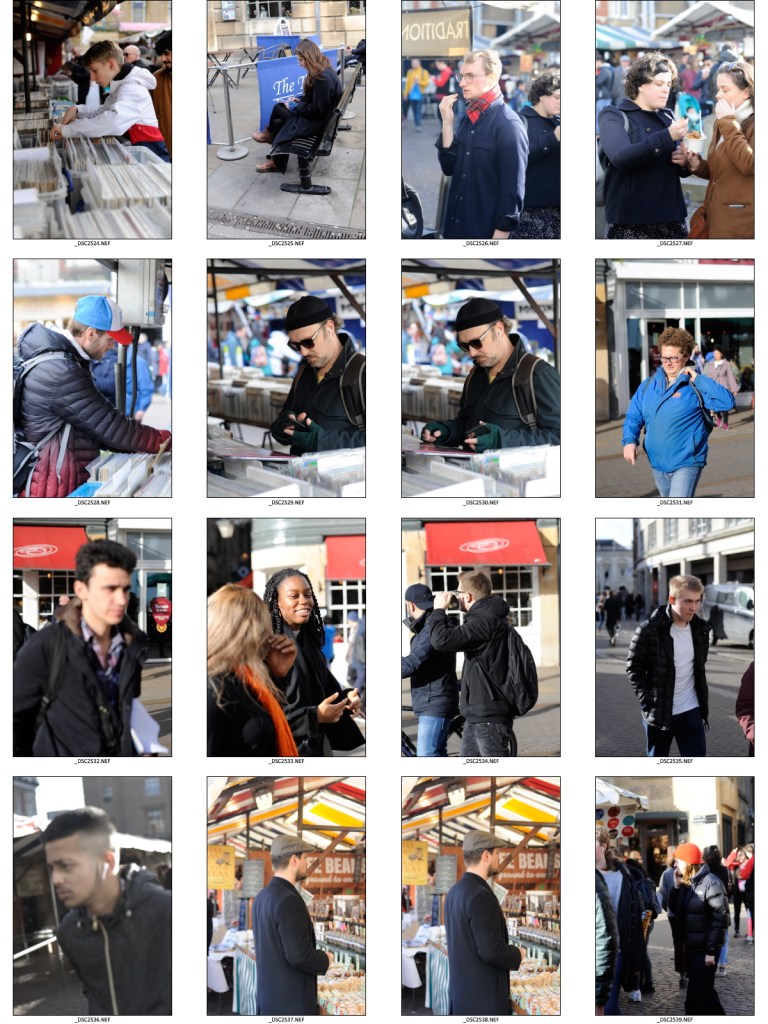
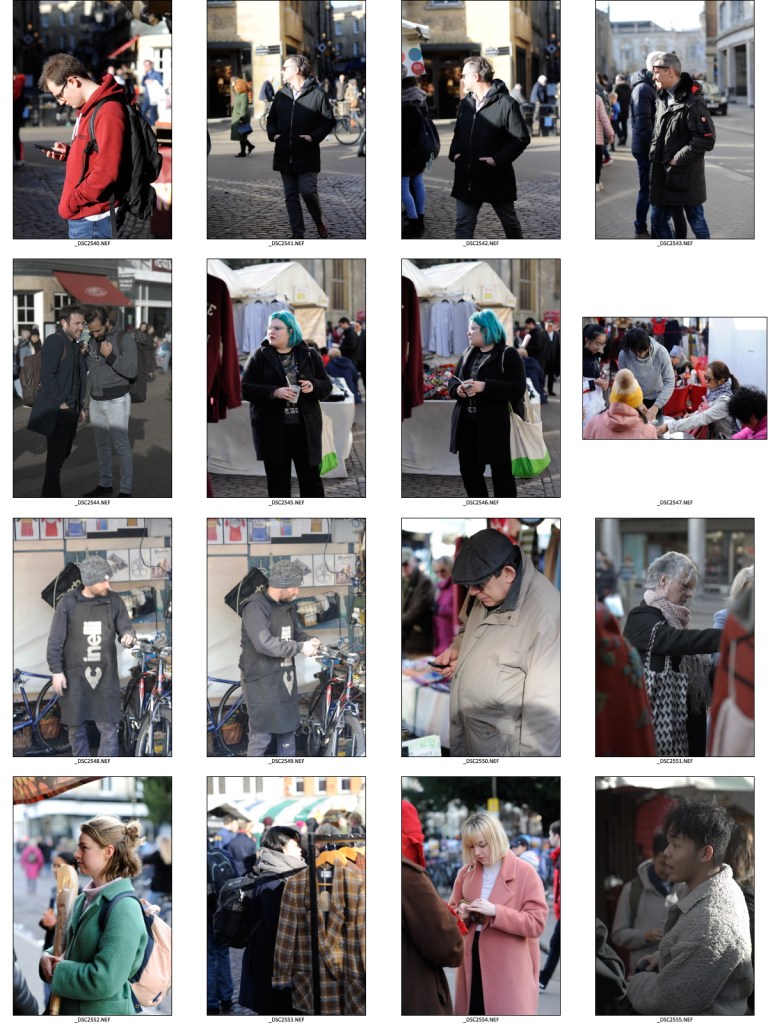

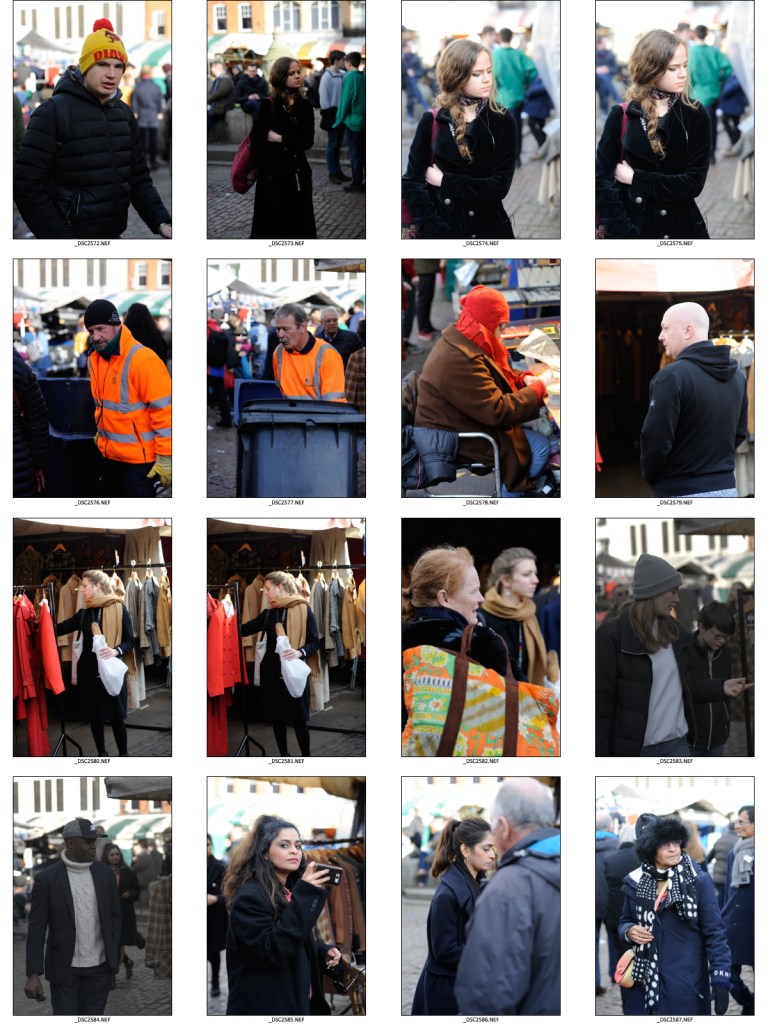
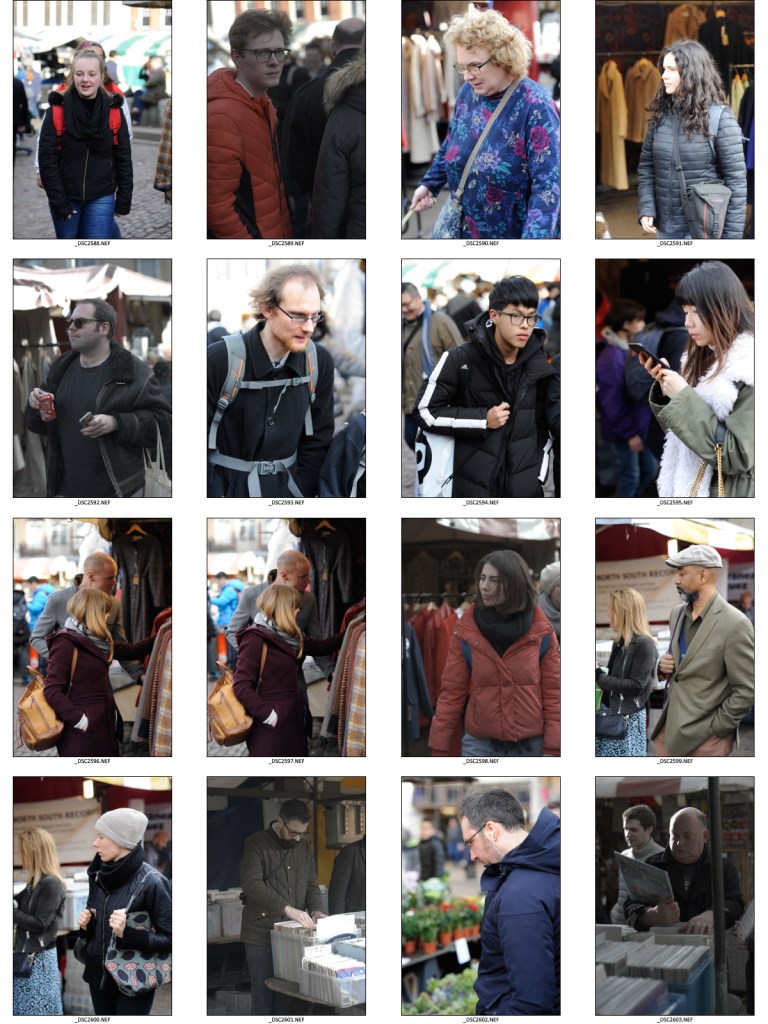
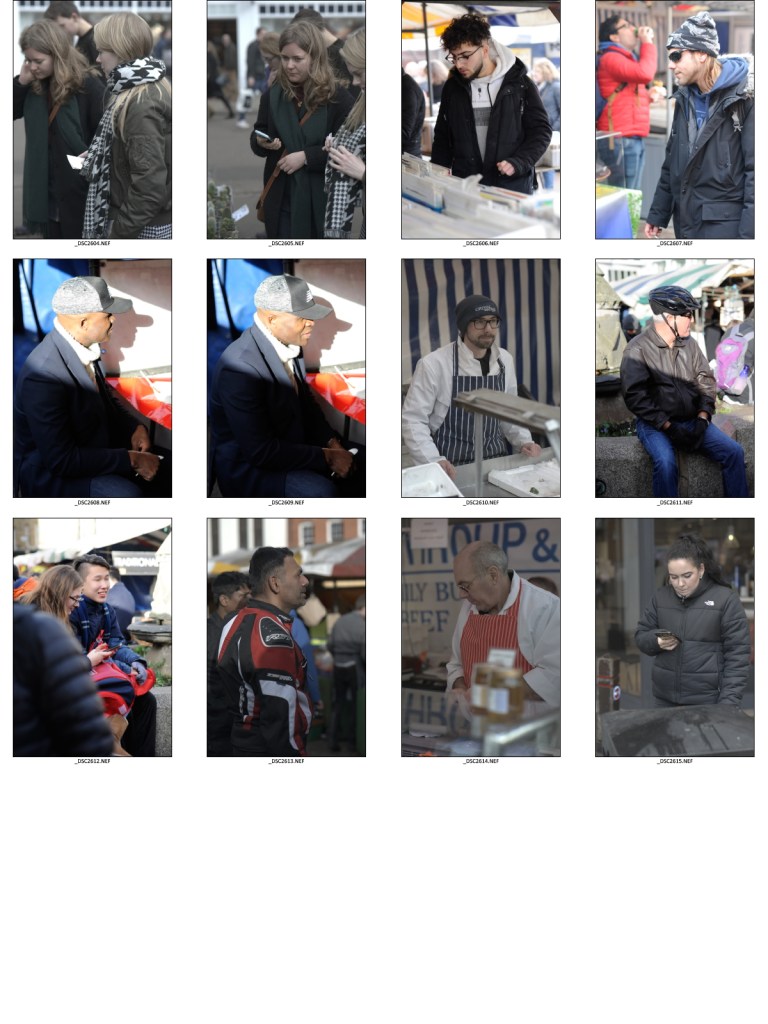
Part of the reason for needing to take more photographs is that in many of the images the focus is slightly off or there are blown high-lights etc. From the 92 initial images I created a shortlist of twenty-one that I thought had potential.
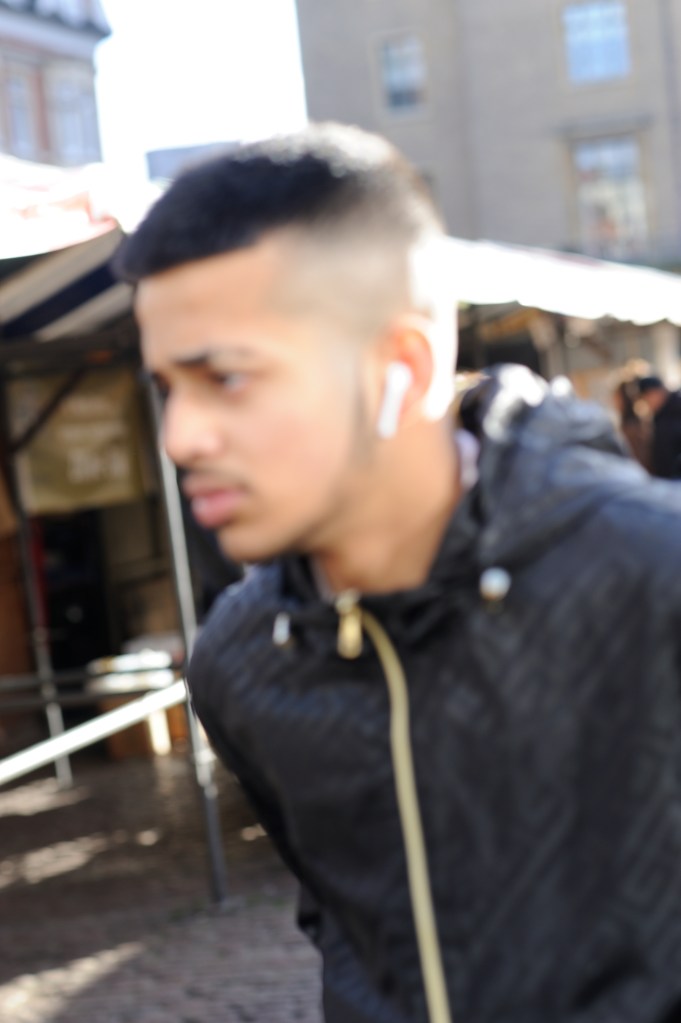
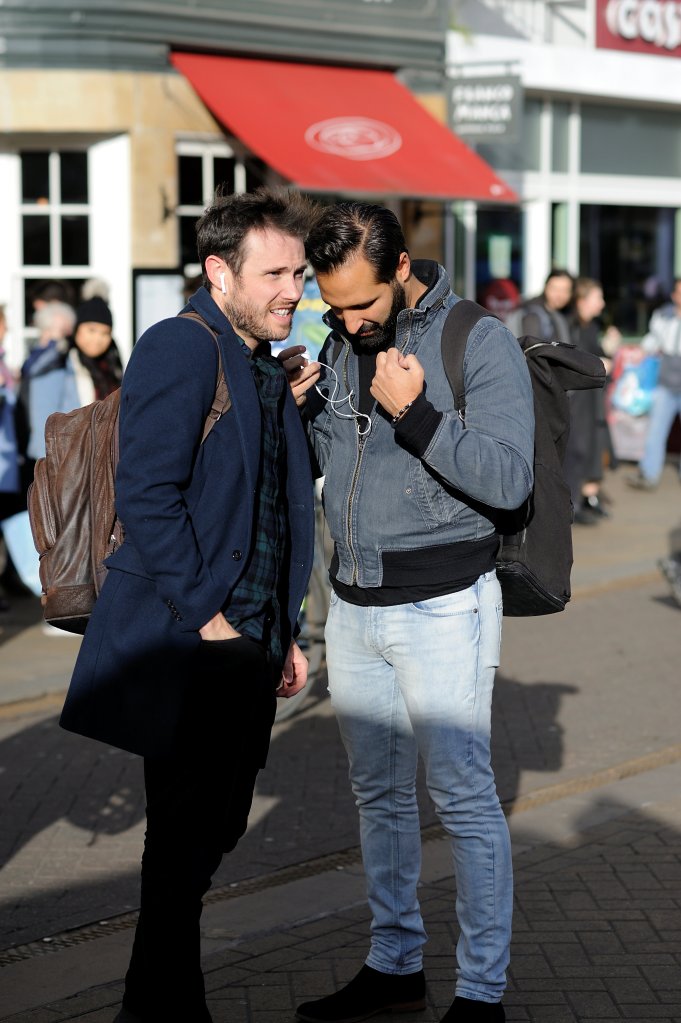
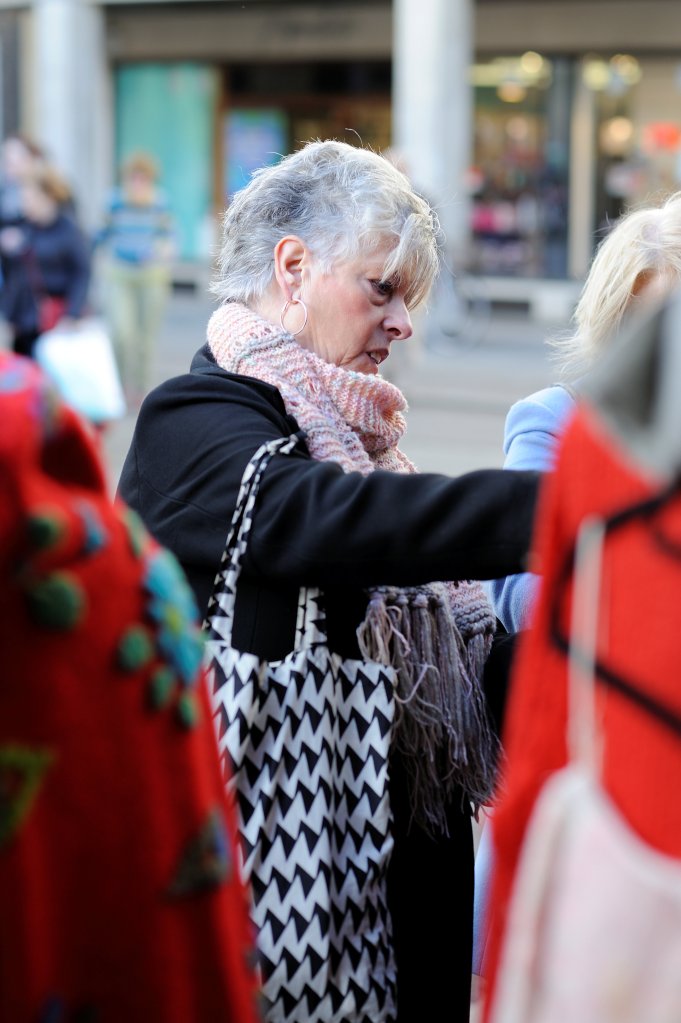


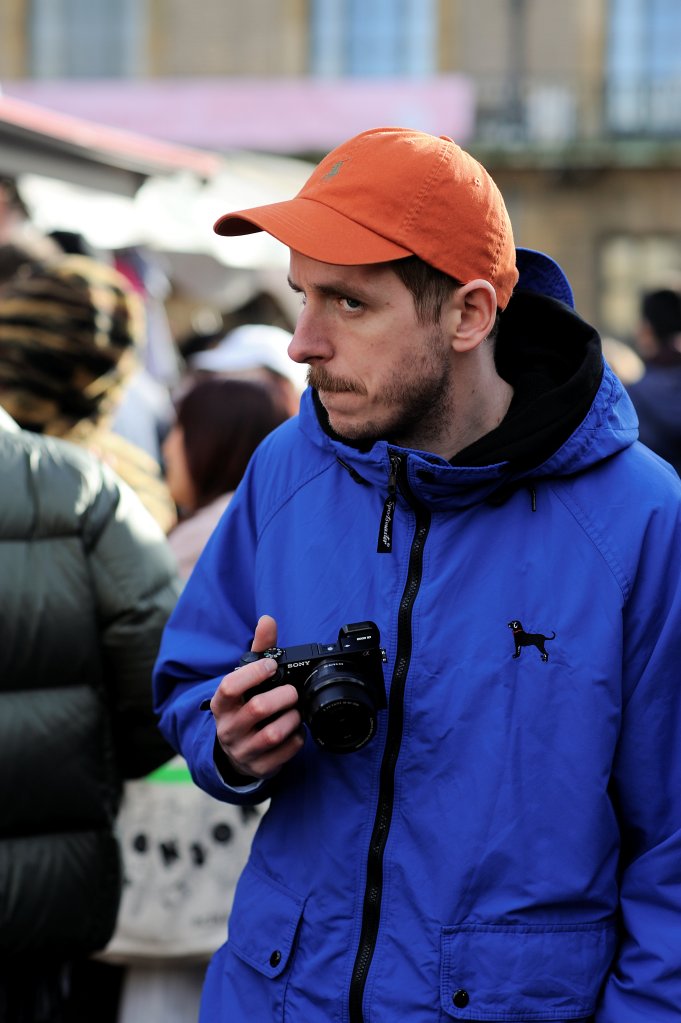
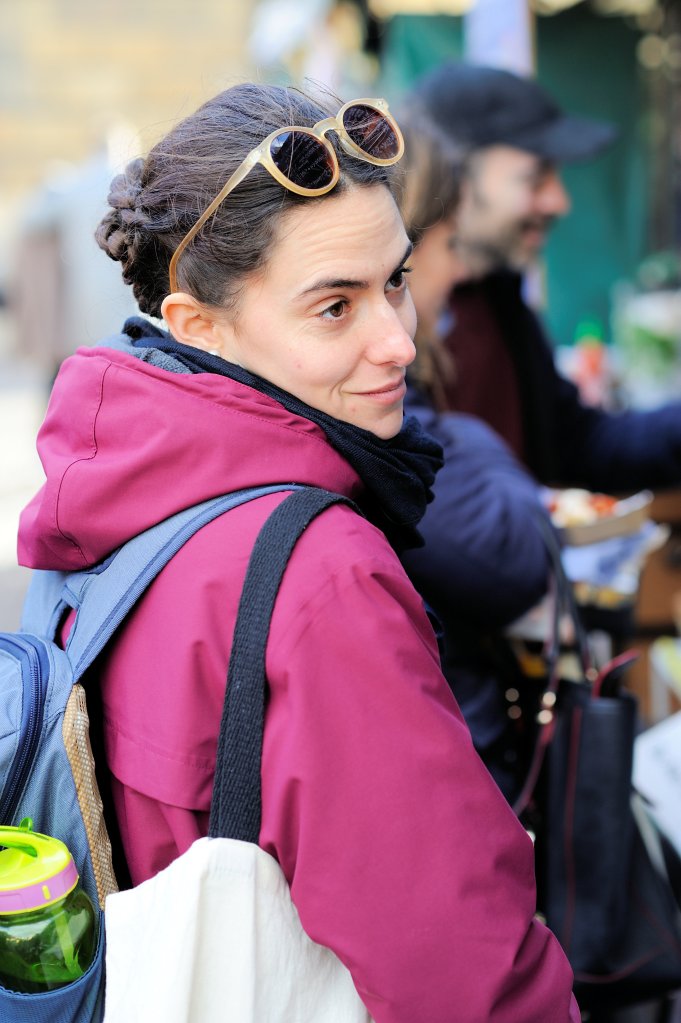
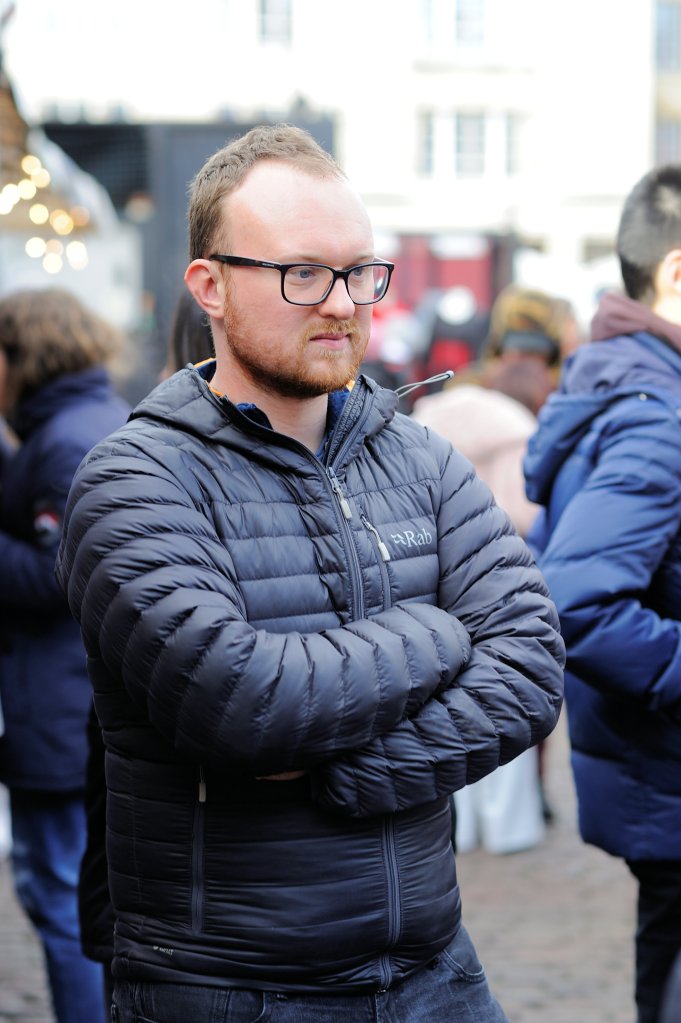
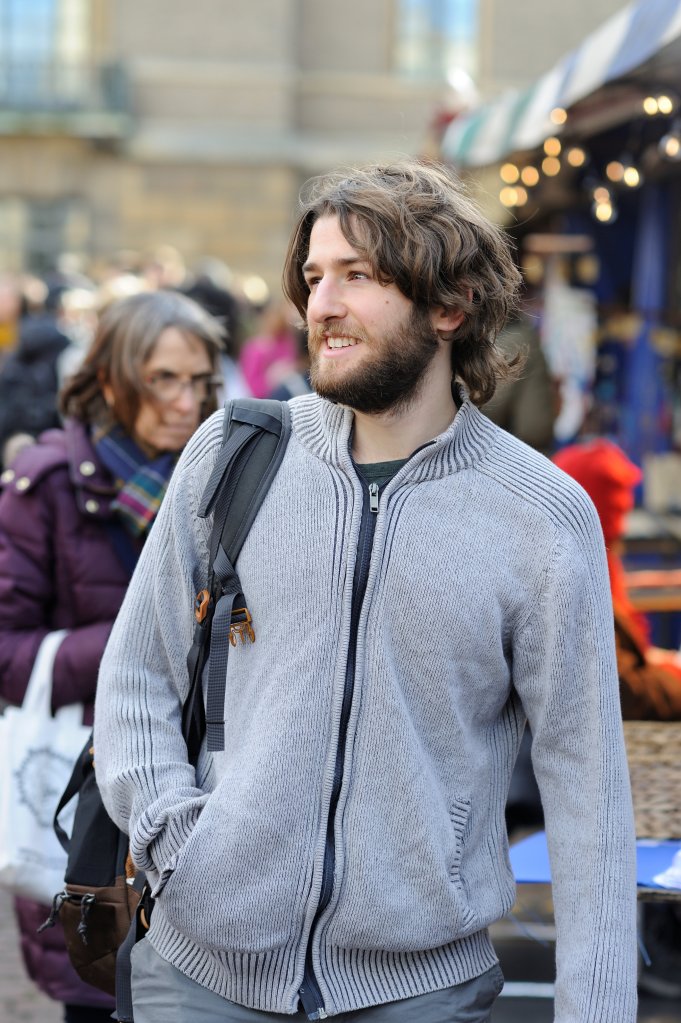

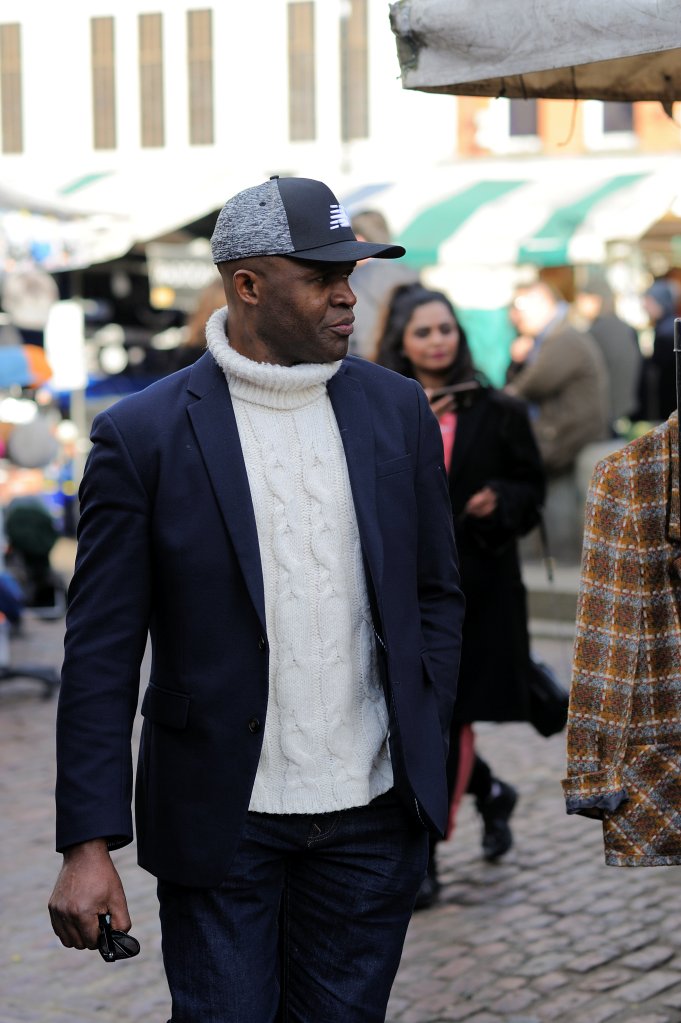
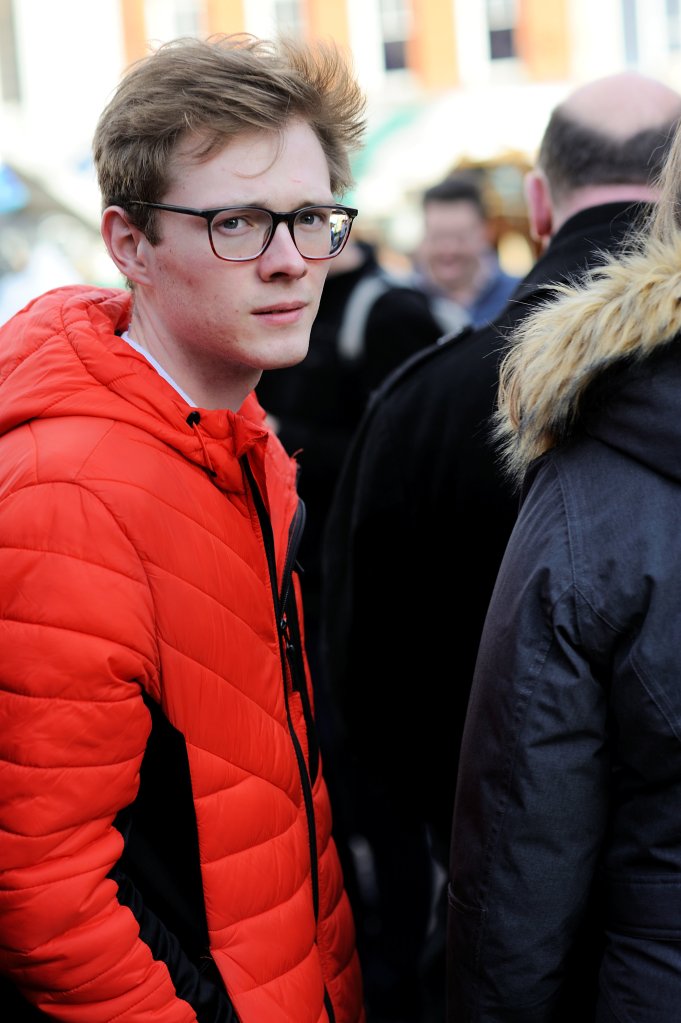
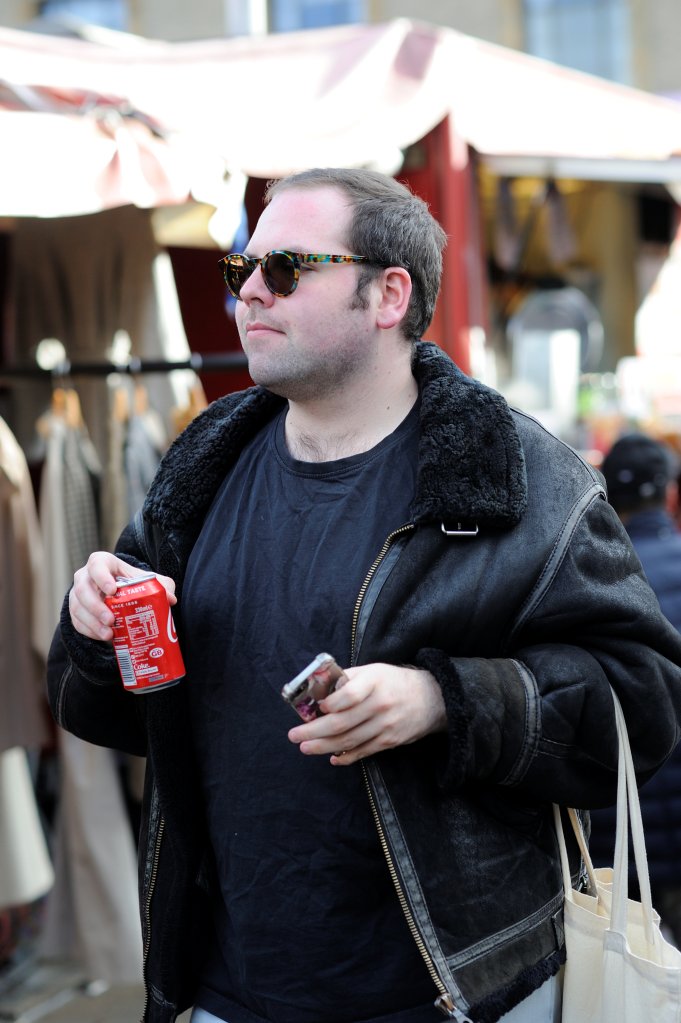
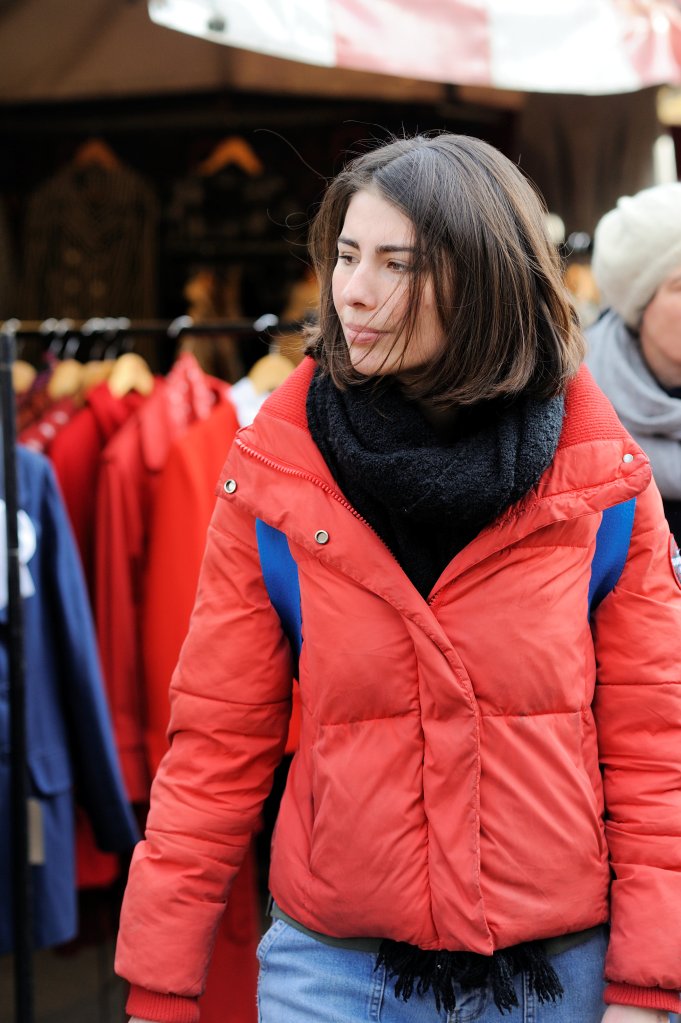
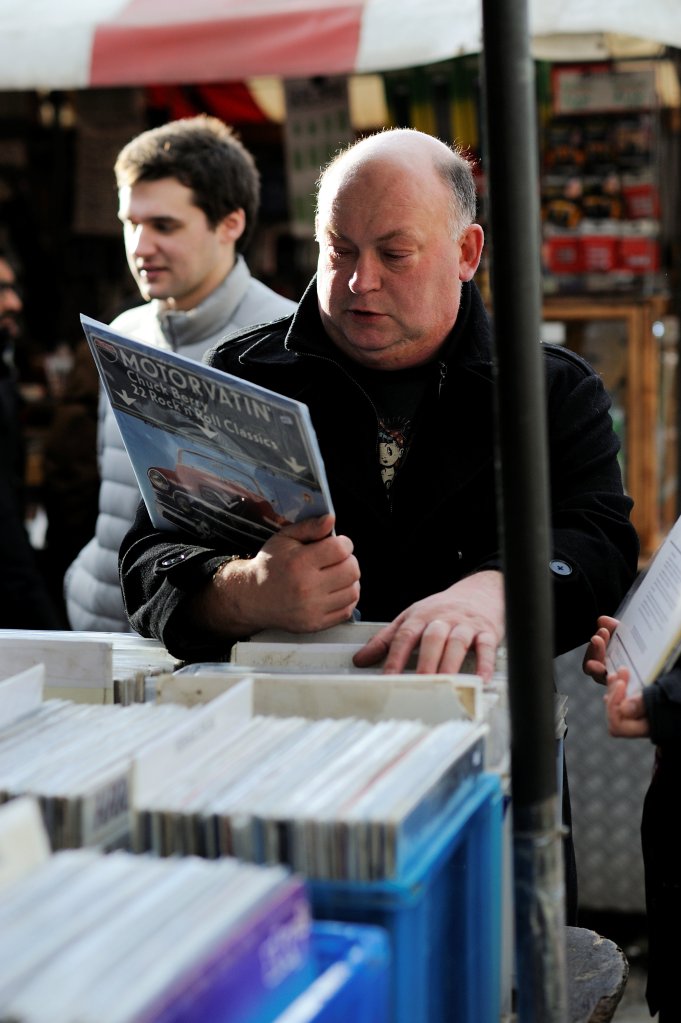
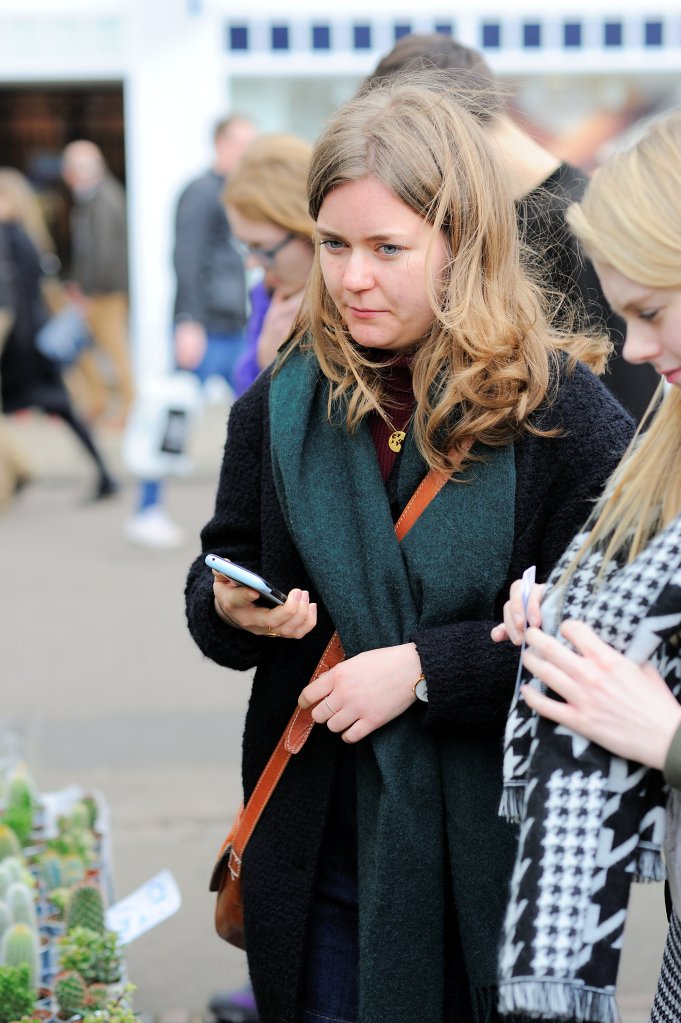
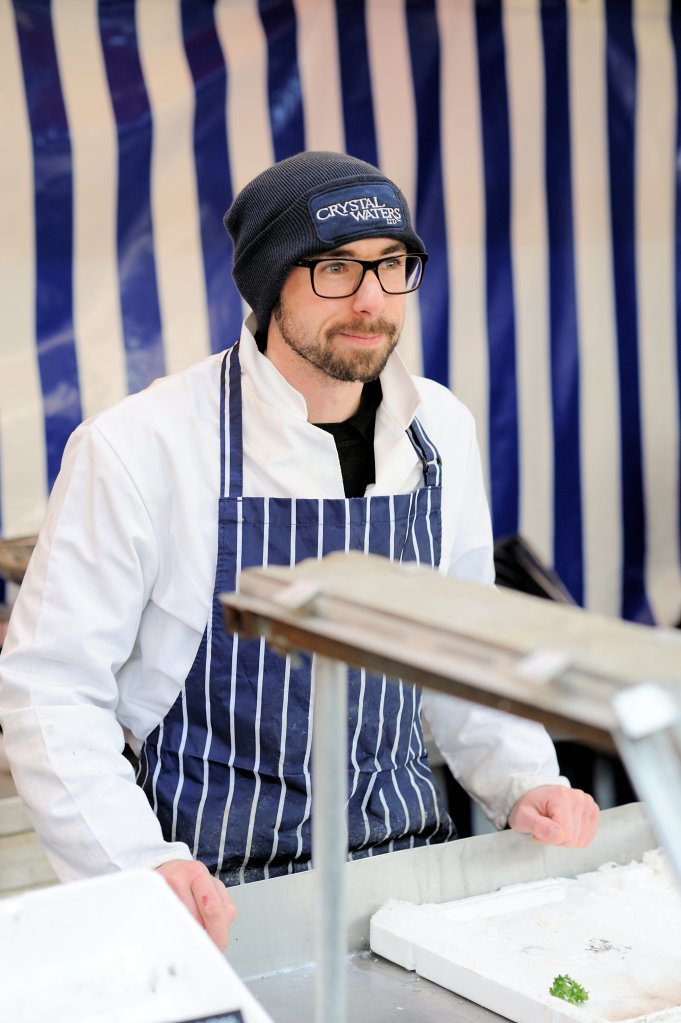
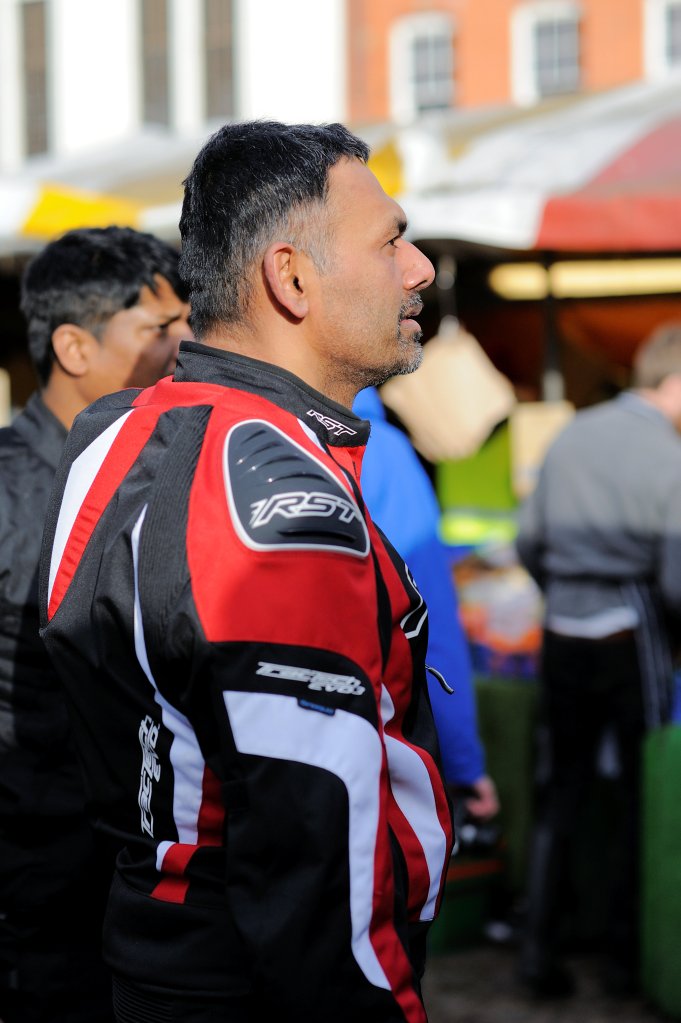

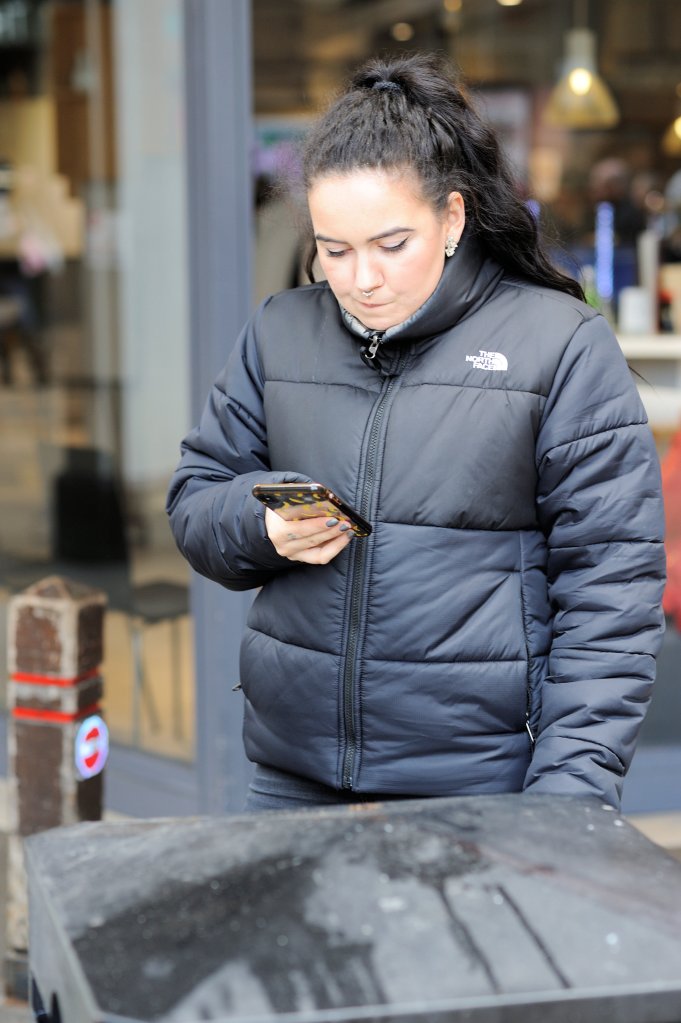
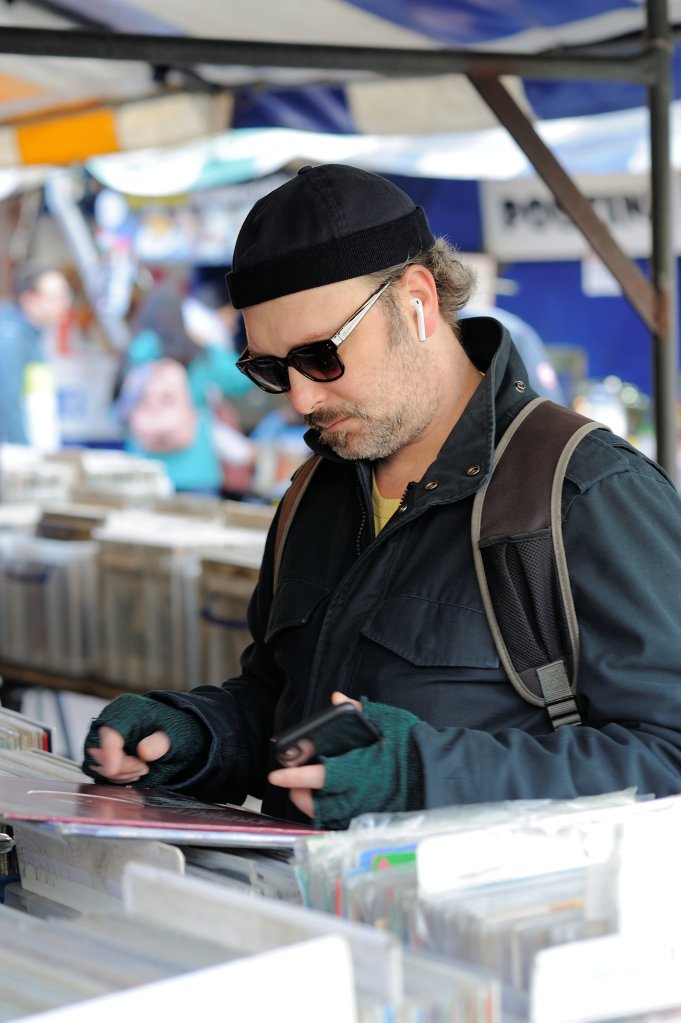
The final images I have selected are set out below.
Initially I found this exercise quite difficult, first because it felt a bit intrusive and that it was possibly wrong to be taking people’s photographs without asking them first; and secondly because of the technical challenges this exercise created. As it was a bright day it was straightforward to shoot with a sufficiently fast shutter speed and wide aperture to freeze the subject in the frame and render the background out of focus, however, focussing on the subject’s face and getting the camera to lock-on did not always happen. This was in part because I did not initially think about where to position myself to begin with, however, after some trial and error, I realised that I needed to stand somewhere where people would naturally slow down giving me time to focus and take their picture. It also had to be somewhere where I could stand relatively unnoticed, ideally have a background that was not too distracting and was not facing into the sun. One of the places that fulfilled most of these criteria was standing by a second-hand record stall. This had the added bonus that people tended to be concentrating on what they were looking for and so were unaware of me taking pictures and where the LPs gave provided some context to the image.
Although the exercise stipulates that I should present a final set of five images for the time-being I have only got as far as whittling the series down to eight. Th first image I have selected because I like the woman’s expression and that her coat contrast with the muted colours of the background. The same is true of the second image, the combination of blue and orange and a puzzling expression. I also like the fact that this gentleman was also out taking photographs. The reason for choosing the third image was again a combination of bold, primary colour in the fore ground and an interesting expression. I’m still not sure if he was looking directly and wondering why I was taking his picture or if he was looking at something just beside me. Either way I like he is looking towards the camera.
The next three images I have selected because they show people, engaged and possibly engrossed in an activity. Although the colours as not as strong as in the first three images, I like the fact that the figures in all three images are purposeful and really considering what they are thinking of buying.
The seventh image I have chosen as it shows a couple of people rather than just an individual and I like the lighting and the fact that the figures stand out against the blurred background.
I selected the final image because I thought the man in it looked very cool. As this was taken before I realised I need to stand in a position where people slowed down the picture is completely out of focus as the camera could not lock-on in time. However, I think there is enough detail in the image, especially if viewed from a distance, and this combined with the angle of the man in the frame give the image a sense of dynamism that I think conveys something about the individual.
I will return to this exercise to see if I feel the same about the images and to see if I can reduce the number down to five after further reflection.
 OCA517401I&P