
Emil Otto Hoppé (1878 – 1972), or E O Hoppé as he is often referred to, was a German born photographer who worked in the UK primarily in the first half of the 20th century. Born in Munich, in the early 1900s he travelled to London to train as a financier. Whilst working for Deutsche Bank he became interested in photography and in 1907 he gave up his career in banking to work as a professional photographer.
In the period from 1907 to 1939 Hoppé became Britain’s most influential photographer, so much so that Cecil Beaton referred to him as ‘the Master’. Hoppé’s work was diverse and included portraits of world leaders, actors and artists and a series of images about the Ballet Russes. He also photographed British industry and travelled to India, Australia, Africa and the USA.
After retiring, in 1954 Hoppé sold his archive, which he had named Dorien Leigh, not EO Hoppé, to the London based picture archive the Mansell Collection. There his work was catalogued by subject rather than by author and so was lost among milions of other images. It wasn’t until 1994, after the archive was sold, that curator Graham Howe retrieved Hoppé’s work and reunited it with Hoppe’s family archive.
Hoppé has been described as a ‘household name’ and not long after starting his own studio in 1907 was he was considered to be the ‘undisputed leader of pictorial portraiture in Europe’ (wikipedia). Hoppé followed European photographers of the late ninetheeth century such Atget and was a contemporary of American photographers Alfred Stieglitz and Edward Steichen. e.g. Looking at Hoppé’s work on http://www.eohoppe.com I was stuck by the range of images he photographed and somewhat suprised at the quality as many of them appeared to be out of focus.
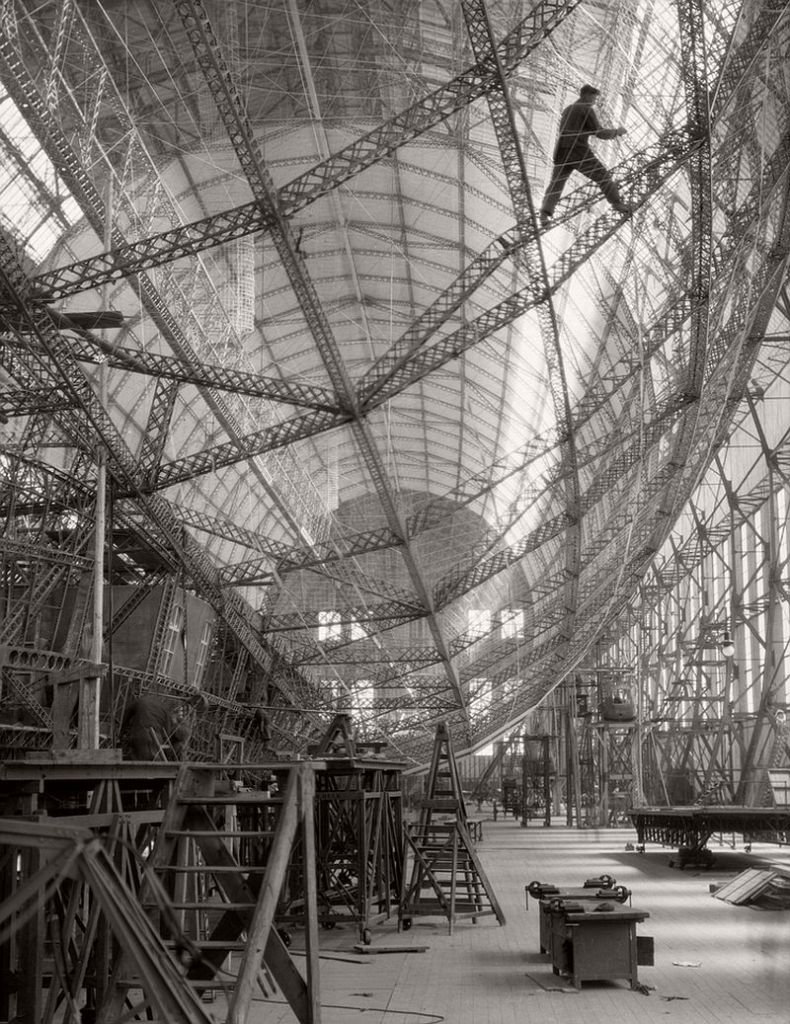

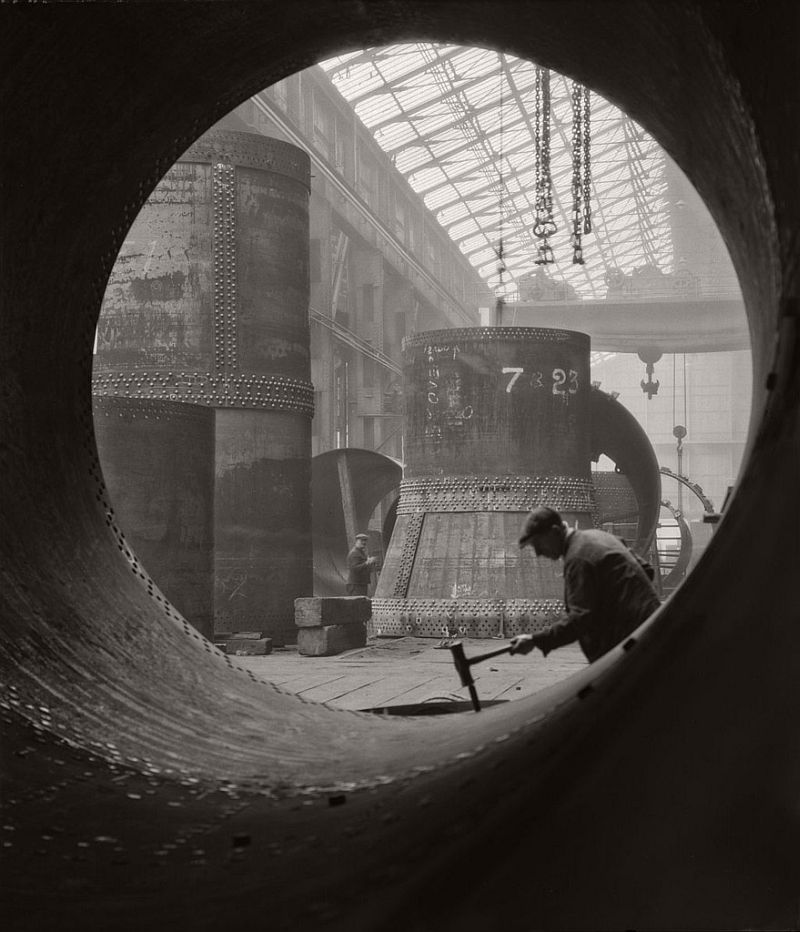

All photographs – © Curatorial Assistance, Inc/E.O. Hoppé Estate Collection
Despite my dismay at the sharpness of some of his images, there are a great many photographs on the Hoppé website to look at and absorb. Whilst some of the portraits are of people who were famous at the time and are now relatively obscure, I think his travel images and workplace studies are fantastic historic documents capturing life and work in the UK and around the world almost one hundred years ago.
Sources
E.O. Hoppé Estate Collection. 2020. E.O. Hoppé Estate Collection. [ONLINE] Available at: https://www.eohoppe.com/about/index. [Accessed 29 January 2020].
The Guardian. 2020. EO Hoppé – review | Art and design | The Guardian. [ONLINE] Available at: https://www.theguardian.com/artanddesign/2011/feb/13/eo-hoppe-exhibition-laura-cumming. [Accessed 29 January 2020].
Wikipedia. 2020. E. O. Hoppé – Wikipedia. [ONLINE] Available at: https://en.wikipedia.org/wiki/E._O._Hopp%C3%A9. [Accessed 29 January 2020].
Jay, B. (1981). Emil Otto Hoppe 1878-1973 a personal snapshot. [online] Billjayonphotography.com. Available at: https://web.archive.org/web/2016*/http://www.billjayonphotography.com/EmilOttoHoppe.pdf [Accessed 29 Jan. 2020].
MONOVISIONS. (2020). Emil Otto Hoppé: Unveiling a Secret. [online] Available at: https://monovisions.com/emil-otto-hoppe-unveiling-a-secret/ [Accessed 29 Jan. 2020].
 OCA517401I&P