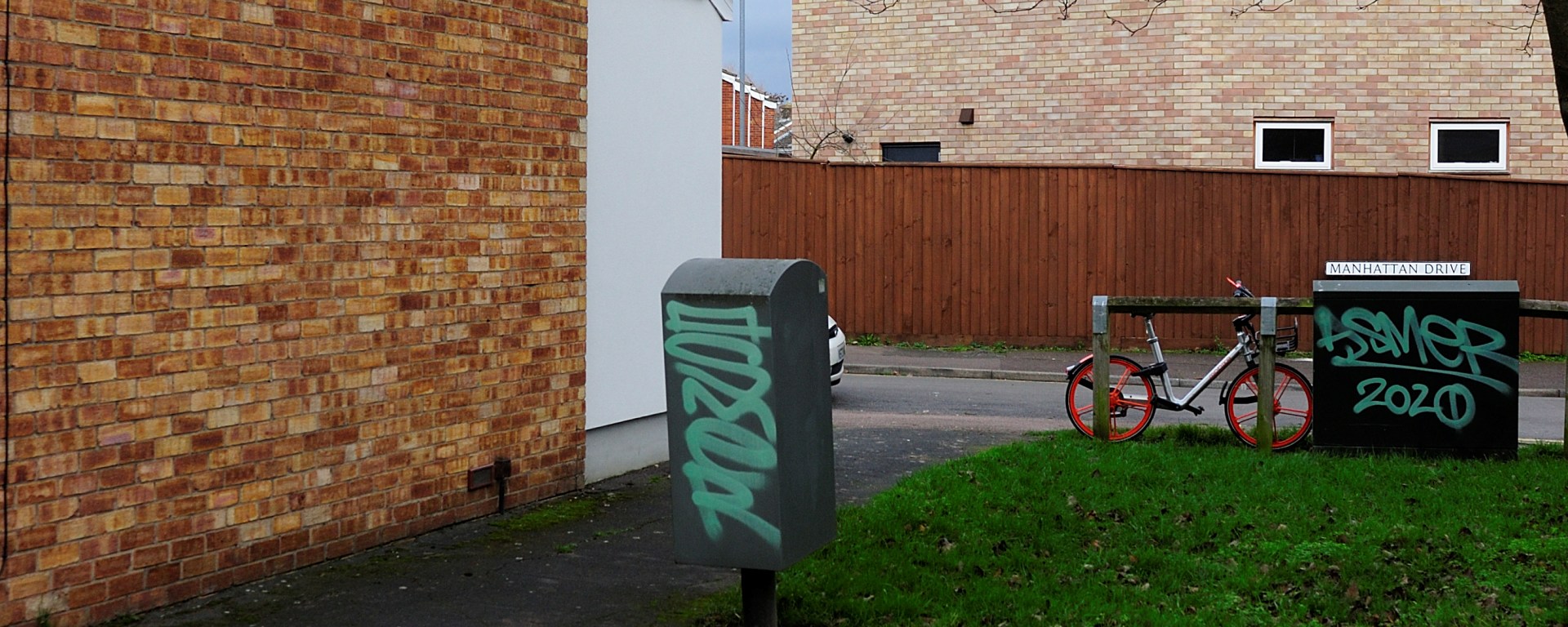
This is the second time I have done this exercise, the previous one being the first assignment of the module Expressing Your Vision. Having completed Expressing Your Vision and Content & Narrative, I wanted to put into practice what I have learned both in terms of approach and trying to construct a narrative.
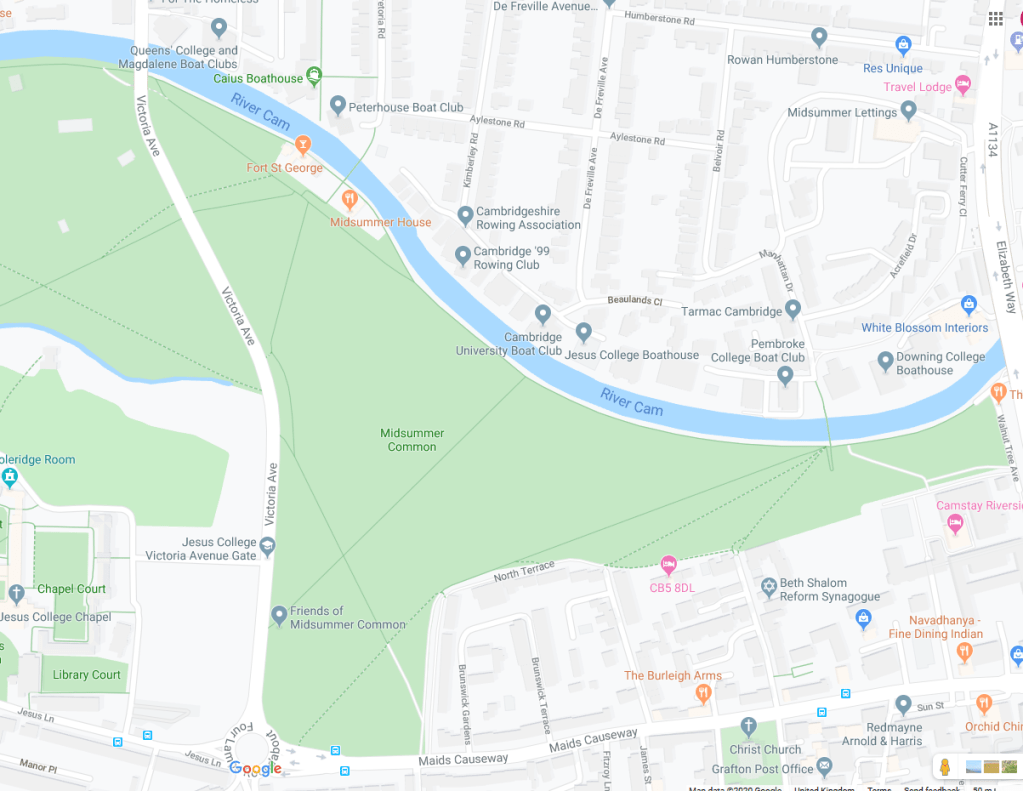
A couple of hundred metres from where I live is Midsummer Common, one of several green spaces in central Cambridge. The common is broadly triangular in shape with one side bounded by the river Cam, another by a main road and the third side by a housing of various ages and types. The common is a bustling part of Cambridge with fairs in the summer, the annual fireworks display on the 5th November and the daily assortment of runners, rowers, dog-walkers and cyclists. I chose this area as my square mile as I run along the river several times a week and often stroll over or by the common if walking to the town centre so it is an area I am familiar with but wanted to look at in more detail.
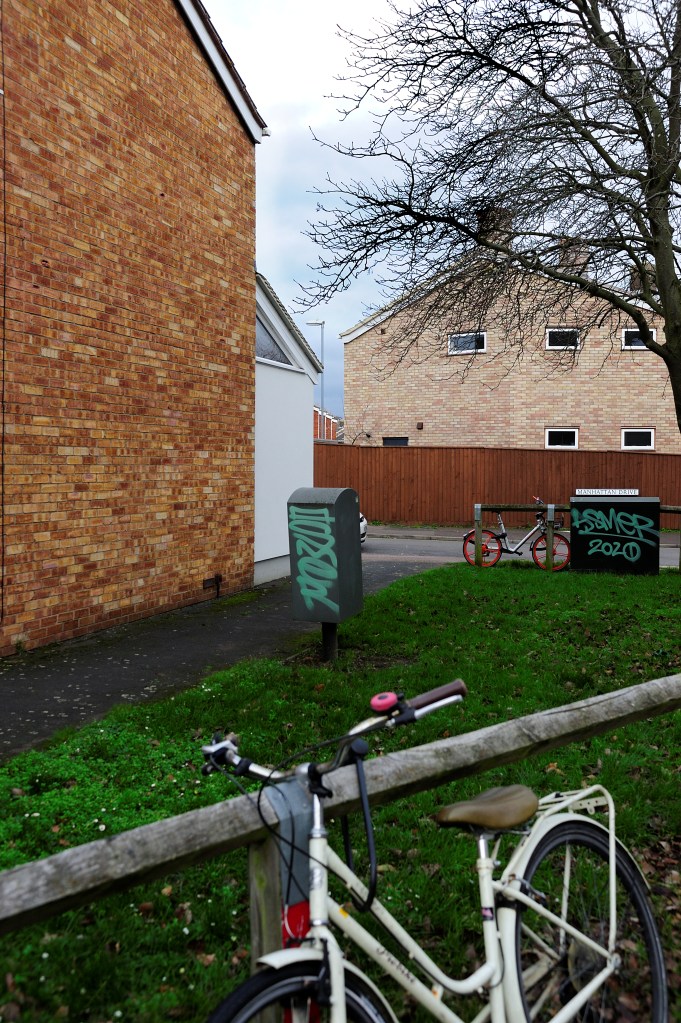
My inital approach for this exercise was to walk around the area where I live and take pictures of things that interested me. As the images I submited for this assignment on the Expressing Your Vision module were shot in Belgium this was looking at a different area rather than reworking my first assignment. Although the images were acceptable and did show some elements of the area where I live, I did not think they were a cohesive series or conveyed much of a narrative. However, one image, shown below, did strike a chord with me.

I am not entirely sure what it is about this image that appeals to me, the ordinariness, the concreteness, the cyclist on the bridge obscured by the tree. My original idea was to create a series of images exploring urban architecture close to where I live, however, this was not really an option as area is anything but a ‘concrete junge’ so it was never really a viable approach. However, from this image I decided that I wanted to create a series based on the buildings that are found around the border of the common and more specifically housing.
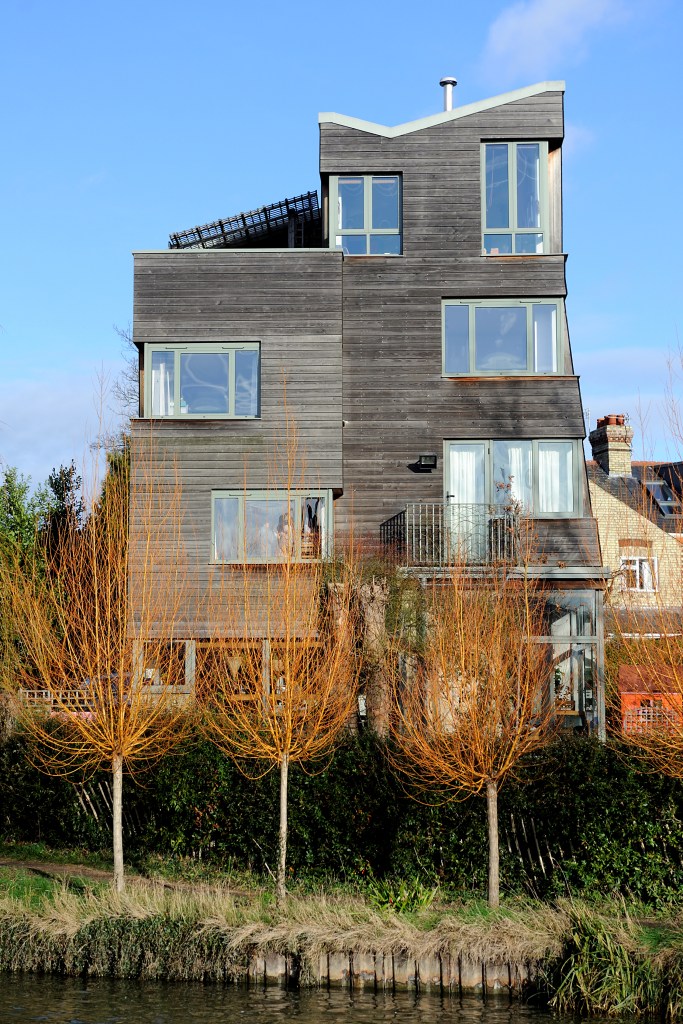

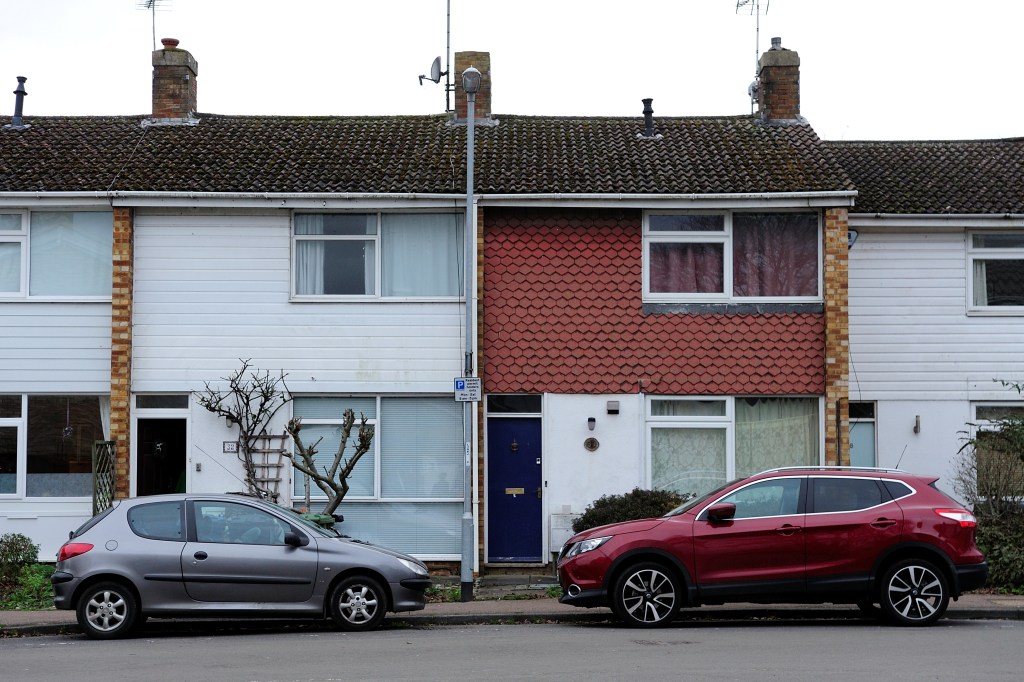
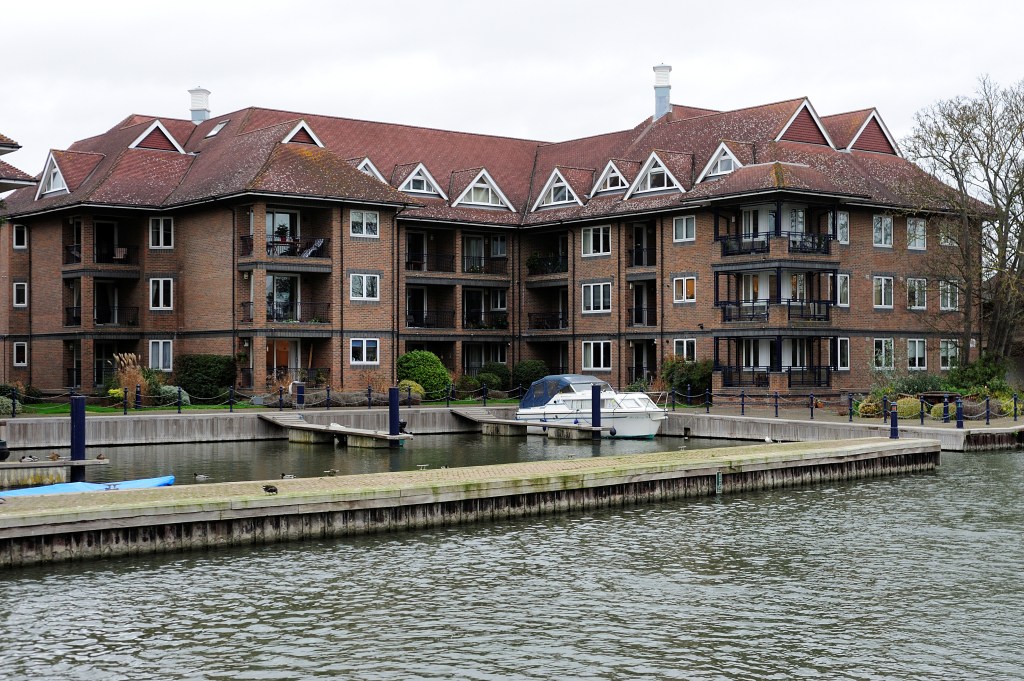
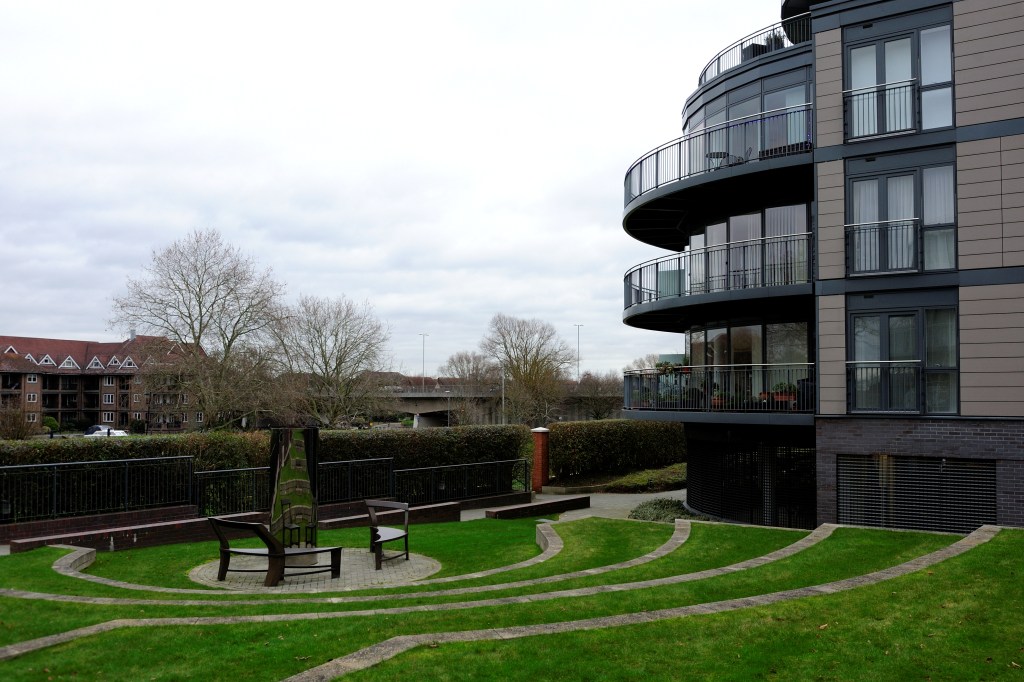
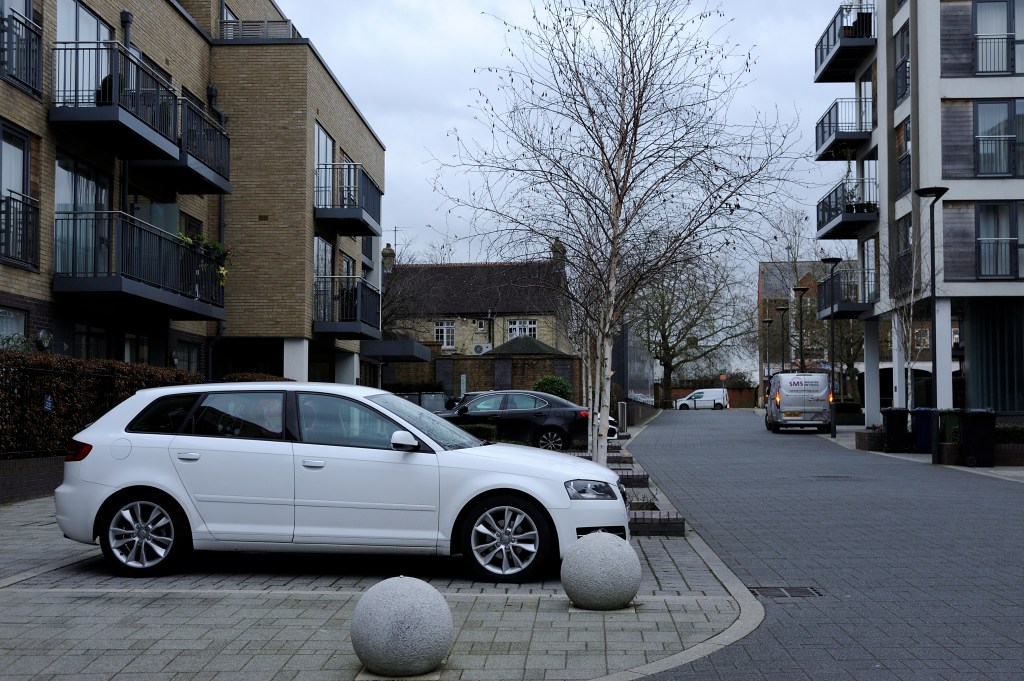

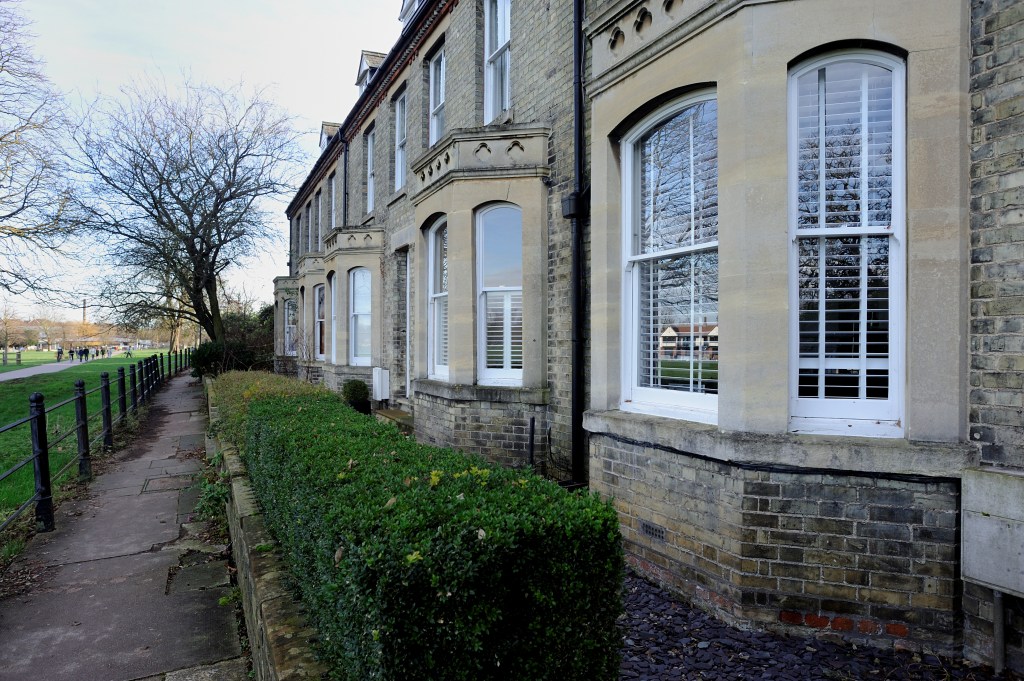

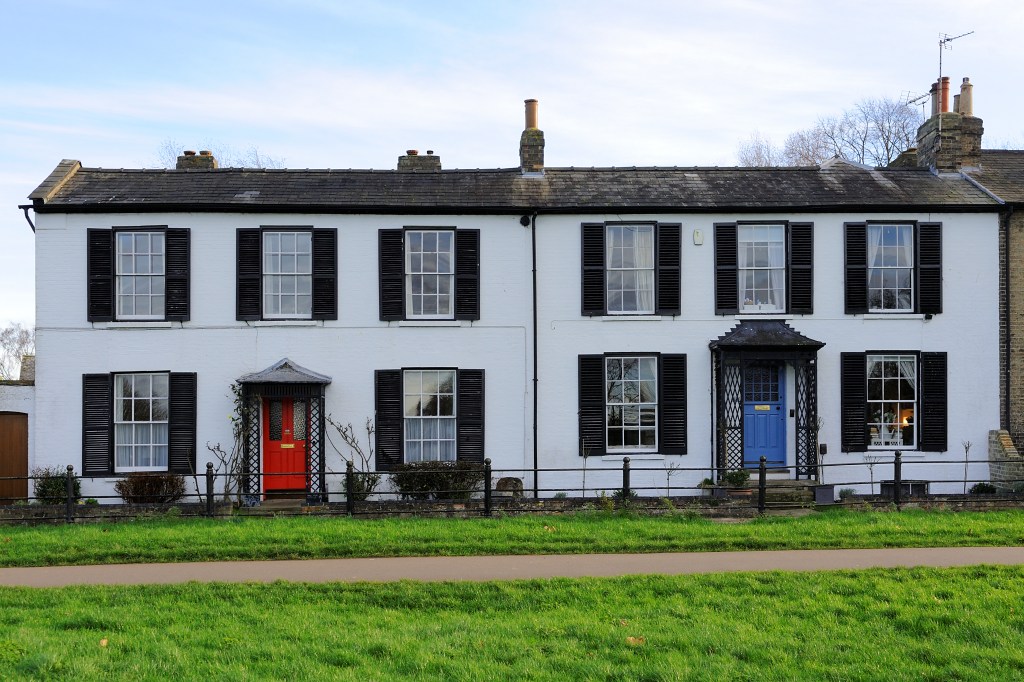
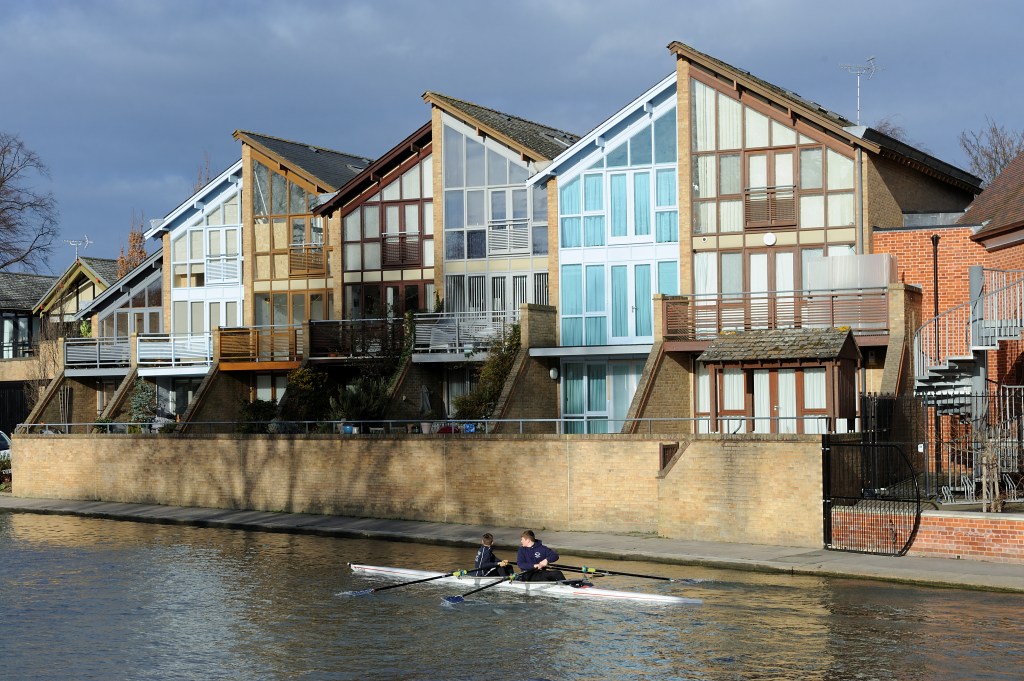
I had not researched any specific photographers beforehand and so I was not trying to emulate a certain approach or style. However, having looked through the images I think the series could be seen as part social documentary and part typology. Unlike contemporary British social documentary photographers Martin Parr and Bill Stephenson my images do not include many people, this was partly though circumstance, there were not many people about when I was taking the pictures, and partly a conscious decision on my part; I did not feel confident about taking pictures of people in their homes and I wanted to leave it up to the viewer to draw their own conclusions about the people who might live in the various buildings. The decision to focus on buildings rather than people gives the series more of a feel of some of the images from John Davies’ collection British Isles 1979 – 2009, although Davies images are shot in black and white and are much grander in scale.
My reference to the series as being partly typological is solely due to the images all being of housing. I recognise that for the series to be a true typology the images would have have have been photographed in a much more considered and consistent manner. I am aware that we will be looking at typologies later in the course and will no doubt be looking at the work of Bernd and Hilda Becher.
When reviewing the images I was struck by how much of the housing had been in the last 40 or so years. Living in one of the streets of Victorian terraced houses near the river my assumption was that most of the housing close to the common would be similar, whereas, most of the housing has probably been built from the 1960s onwards.
From a technical persepective I realised that to create a typological series of images is much more challenging than it at first appears. The need for consistent direction and quality of light, vantage point and field of view is difficult to achieve when photographing objects of different sizes on different and from different locations.
Sources
Davies, J. 2020. John Davies Photography. [Online]. [11 January 2020]. Available from: http://www.johndavies.uk.com/peak.htm
 OCA517401I&P